Planning for Future Equipment in a Custom Vehicle
Planning to add equipment later? Consider mounting space, payload, power demand and maintenance access while developing your custom vehicle layout.
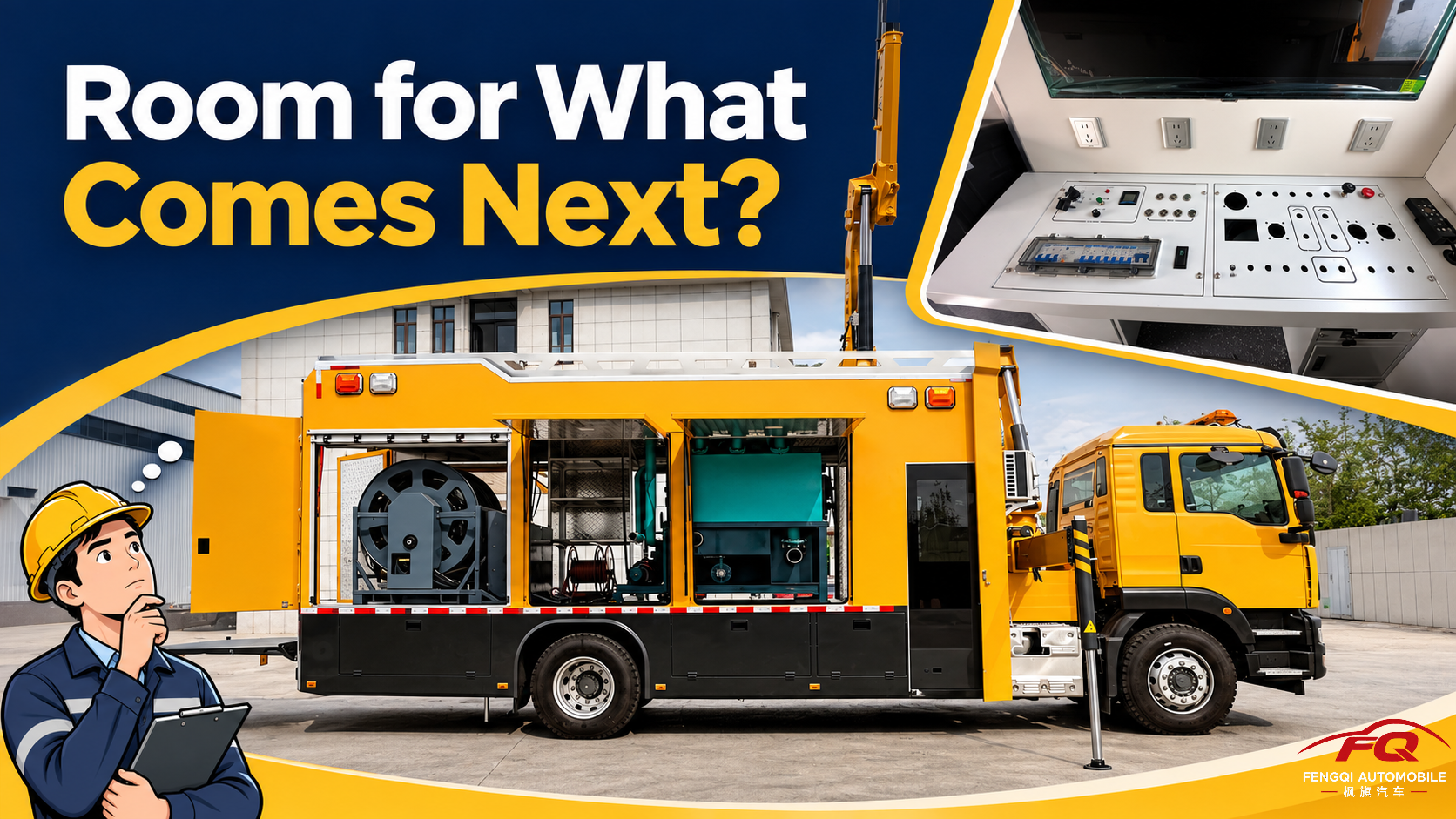
“Can we leave room for another piece of equipment?”
It is a reasonable question when planning a custom vehicle.
The current task comes first. The work may develop, equipment may change, and the vehicle may eventually need to support an additional function.
Considering that possibility early can make later changes more manageable. Deciding what to reserve requires some information about the proposed addition.
What equipment might be added? When might it be needed? Will it remain permanently installed, or travel with the vehicle only for certain jobs?
Will it operate alongside the existing equipment?
Even an outline helps the design team assess the options.
Space needs to include installation and use
An empty area on a layout drawing may appear suitable for another machine.
Once installed, that machine will need secure mounting. It may require cables, pipes or ventilation. An operator may need room to use it, and a technician may need access for servicing.
Its installation could also affect equipment already on the vehicle.
A useful review therefore considers the complete working arrangement, including doors, controls, access panels and component removal routes.
Approximate dimensions and an equipment manual can help establish these requirements before the final model has been selected.
Check weight alongside available space
Physical space is one part of the assessment.
Additional equipment also uses payload. Its proposed position needs consideration within the vehicle’s overall weight distribution.
The review should account for the operating load, including personnel, tools and consumables, as applicable to the project.
A clear area inside the body can look available while the remaining weight allowance places a different limit on what can be added.
Sharing an estimated equipment weight early helps the converter assess whether the proposed future use is realistic.
Review the power system behind the connection
An additional socket is a visible provision. The system supporting it needs its own assessment.
The original power arrangement is selected around the agreed equipment and working pattern. Adding equipment may change total demand, starting requirements or the combination of loads operating together.
Where the vehicle relies on an onboard energy supply, the addition may also affect working time.
Cables, protective devices and connection arrangements need to suit the proposed use.
The control console pictured with this article illustrates how equipment functions, power distribution and operator controls come together in a vehicle. A future addition may involve several of these elements.
An example of a vehicle control console during assembly. Future equipment requirements should be discussed alongside the electrical and control arrangements.
Reserve capacity according to the expected change
Extra provision takes space, adds weight and may increase cost.
Where a later addition is already planned, the team can assess specific measures. Depending on the equipment, these might include a mounting area, a cable route or an appropriate connection point.
Where the future requirement remains uncertain, the discussion can focus on likely changes and the resources worth allocating to them.
The current task still needs to guide the design. Provision for later work should have a practical basis in the customer’s plans.
Include future service and modification arrangements
It also helps to discuss who would carry out the later work.
Will the vehicle return to the original converter? Will a local workshop install the equipment? Who will supply the new machine and its installation information?
These arrangements may influence access, documentation and the interfaces worth considering during the initial build.
An equipment list describes what the vehicle needs today. A brief outline of its expected next stage helps the team assess what may be worth preparing for.
Share the plans you already know
When discussing a custom vehicle with Fengqi Automobile, include any known future requirements alongside the current task.
Useful information includes:
- The likely equipment type and approximate size and weight.
- Its expected power and connection requirements.
- Whether it will run alongside existing equipment.
- The expected timing of the addition.
- Who is likely to install and maintain it.
The plan can develop during the discussion. Having these details early helps determine what to reserve, how much provision is justified and which decisions can wait.
Discuss your current and future vehicle requirements through our vehicle quotation brief.
Related reading
Why Maintenance Access Matters in Custom Vehicle Conversions
What to Confirm Before Buying a Base Vehicle for Conversion
Planning a build?
Tell us your operational requirements — we'll come back with an engineered proposal.
WeChat QR

WhatsApp QR