What to Confirm Before Buying a Base Vehicle for Conversion
Confirm the exact vehicle model, configuration and intended use before procurement to help keep a custom vehicle conversion aligned with the agreed plan.
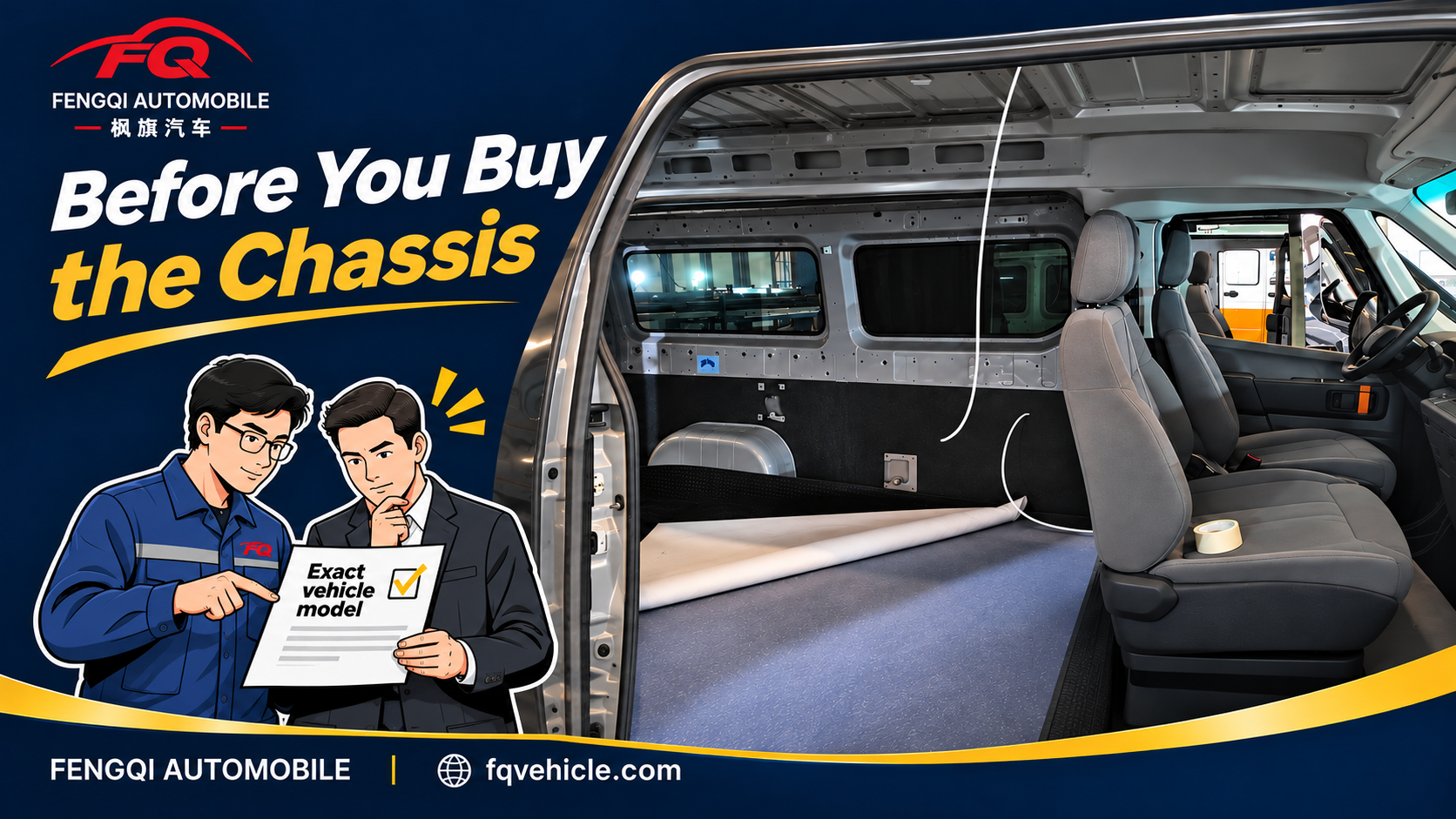
An agreed proposal can change at procurement
The conversion proposal had been discussed and agreed.
During the client’s internal approval process, the person handling the project changed. Some of the earlier information did not carry through to the new contact.
The client purchased a chassis, but its exact model differed from the one planned for the project.
By the time the mismatch was identified, the purchasing decision had already been made.
This was a project for the Chinese domestic market. The planned chassis was linked to the vehicle’s product approval arrangements. Changing it meant revisiting the design and approval work.
The budget had already been approved. We revised the proposal, reduced some planned equipment and completed a new approval application.
The project went ahead, with changes to the original configuration and additional work for the parties involved.
Identify the exact vehicle being purchased
A buyer may begin by comparing brand, dimensions, engine and price. The conversion team also needs the exact model and configuration.
Vehicles within the same range can have similar headline specifications while differing in details relevant to the proposed work.
Depending on the project, the review may include body dimensions, available payload, axle ratings, seating configuration, electrical interfaces and the manufacturer’s body-building requirements.
For a van conversion, usable interior dimensions and door openings may affect the equipment layout. For a chassis-cab conversion, the proposed body and equipment need to be assessed against the selected chassis.
A model name alone may leave some of these details unresolved. The supplier’s specification and exact vehicle designation provide a clearer basis for review.
Check the vehicle against the task
The base vehicle needs to support the complete operating arrangement.
That includes installed equipment, personnel, tools, consumables and anything else carried during normal work.
The review should also consider where the vehicle will operate. Site access, route conditions and the expected working pattern can influence the choice.
Where equipment will run while the vehicle is stationary, its power requirements need discussion early enough to inform the conversion plan.
Customers do not need to settle every engineering detail themselves. Providing a clear description of the task allows the vehicle supplier and converter to assess the proposed choice together.
Establish the requirements for the destination market
Registration and approval requirements depend on the destination and intended vehicle category.
The Chinese project described above required changes to its product approval arrangements. An export project needs its own review of the applicable requirements and responsibilities.
Before procurement, establish what documentation is needed, who will provide it and which vehicle configuration the proposed route covers.
Where information remains uncertain, resolving it before the purchase can help avoid committing the project to an unsuitable vehicle.
Put the procurement decision in writing
A technical discussion needs a record that the purchasing team can use.
Before an order is placed, the project record should identify:
- The exact vehicle model and agreed configuration.
- The specification reviewed by the converter.
- The planned conversion and equipment scope.
- The destination and intended use.
- Any conditions that still require confirmation.
If the vehicle supplier proposes a substitute, send its details back for review before accepting it.
This is especially useful when the project changes hands. The next contact needs to see what was agreed and which changes require another check.
Send the vehicle details before placing the order
If you already have a base vehicle in mind, share its specification with the conversion team alongside your intended application and equipment list.
If you have already purchased it, provide the exact details at the start of the discussion. That allows the proposal to develop around the vehicle actually available.
Fengqi Automobile works with customers to connect the base vehicle choice with the proposed conversion. Early access to accurate vehicle information makes that discussion more specific.
Discuss your proposed base vehicle through our vehicle quotation brief.
Related reading
Why Maintenance Access Matters in Custom Vehicle Conversions
Planning for Future Equipment in a Custom Vehicle
Planning a build?
Tell us your operational requirements — we'll come back with an engineered proposal.
WeChat QR

WhatsApp QR