Buyer guide · Quotation preparation
What to Prepare for a Custom Vehicle Quotation
You do not need a finished technical specification to start. Tell us what the vehicle must do, where it will work and what is still undecided. Photos, a rough layout or an existing tender can help.
Start with these details
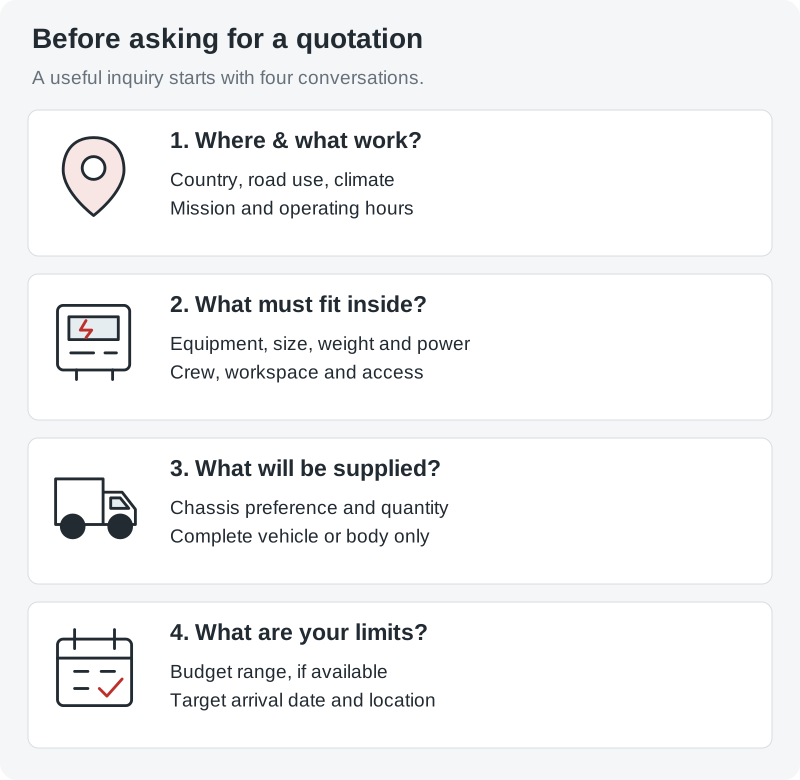
- 1. Destination and registration
- Country, intended road or off-road use, left- or right-hand drive, and any known import or registration requirements. Ask your importer what must be confirmed before ordering.
- 2. Mission and working environment
- Describe the job, road conditions, climate and expected daily operating hours. A vehicle name alone does not describe its working requirements.
- 3. Quantity and delivery format
- How many units? A complete vehicle, a body for a local chassis, or an assembly arrangement? If undecided, explain what can be sourced or assembled locally.
- 4. Equipment and power
- List the equipment, approximate weights and dimensions, and electrical ratings where known. Identify customer-supplied equipment. For a replacement project, send photos of the existing installation.
- 5. People, layout and access
- Number of people travelling and working inside, workstations, storage, loading access and space needed to operate or service equipment. A rough sketch is enough for an initial discussion.
- 6. Chassis preference
- Preferred model, fuel type and local service support, if known. Otherwise ask for a recommendation based on the mission, load and destination.
- 7. Budget range and target date
- A budget range is helpful if available; separate the vehicle budget from freight and destination costs. State when and where the vehicle must arrive, and any tender deadline.
Why is there no single fixed price or delivery time?
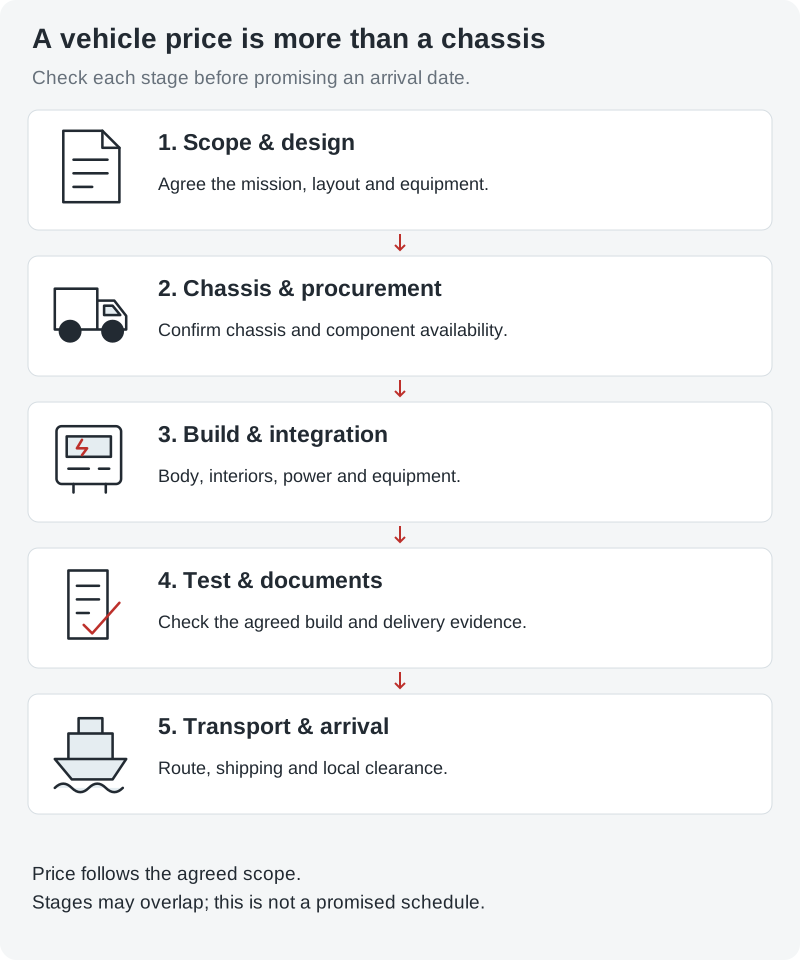
The chassis, body structure, equipment package, power system, quantity and destination requirements change the scope. An initial estimate should list its assumptions; a detailed quotation follows an agreed configuration.
Chassis availability, design approval, equipment procurement, production, testing and transport all affect timing. Ask which milestone starts the stated lead time and whether shipping and destination approval are included. Production time and arrival date are different commitments.
What should the quotation make clear?
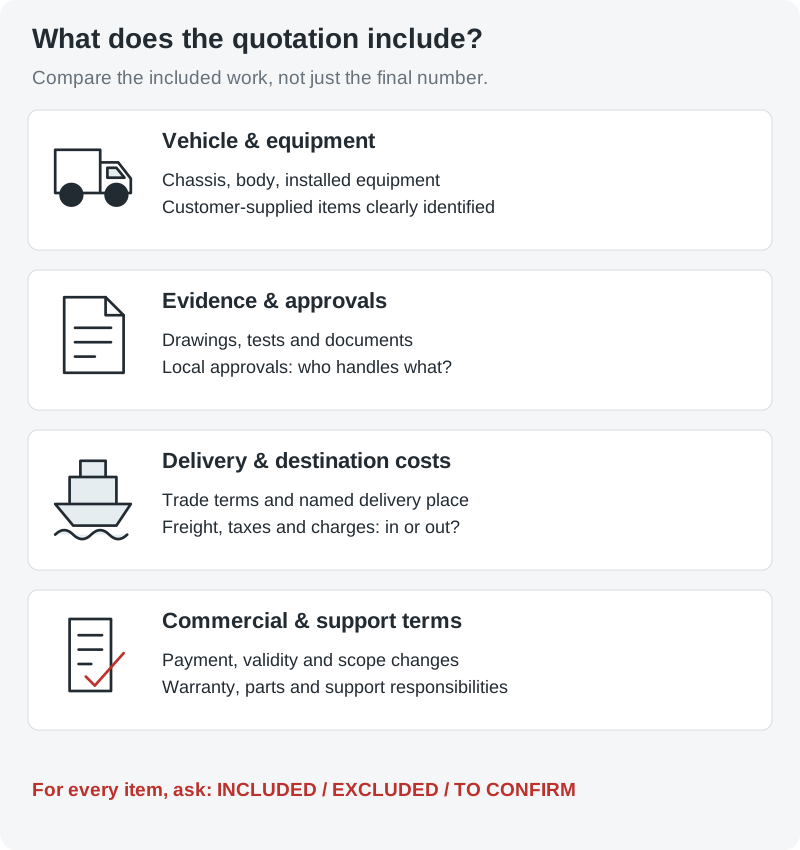
- The exact chassis, body and equipment scope, including customer-supplied items.
- Included drawings, tests and documents, and destination approvals still to be confirmed.
- Delivery location and trade terms, freight assumptions, taxes and charges included or excluded.
- Payment milestones, quotation validity and how specification changes affect cost and timing.
- Warranty scope, responsibility for different equipment, spare parts and support arrangements.
A lower total is only comparable when the included work and delivery scope match.
Send what you know
The buttons below open a message with a short checklist. Fill in the items you know; leave the rest for discussion.
Email: [email protected]
Want to check a vehicle range first? Ambulances · Shelters · Service vehicles · Command vehicles