How Equipment Integration Shapes an Emergency Rescue Vehicle
Integration starts with who uses the box, not the equipment list: the four decisions behind a rescue vehicle's working space, and why changes stop.
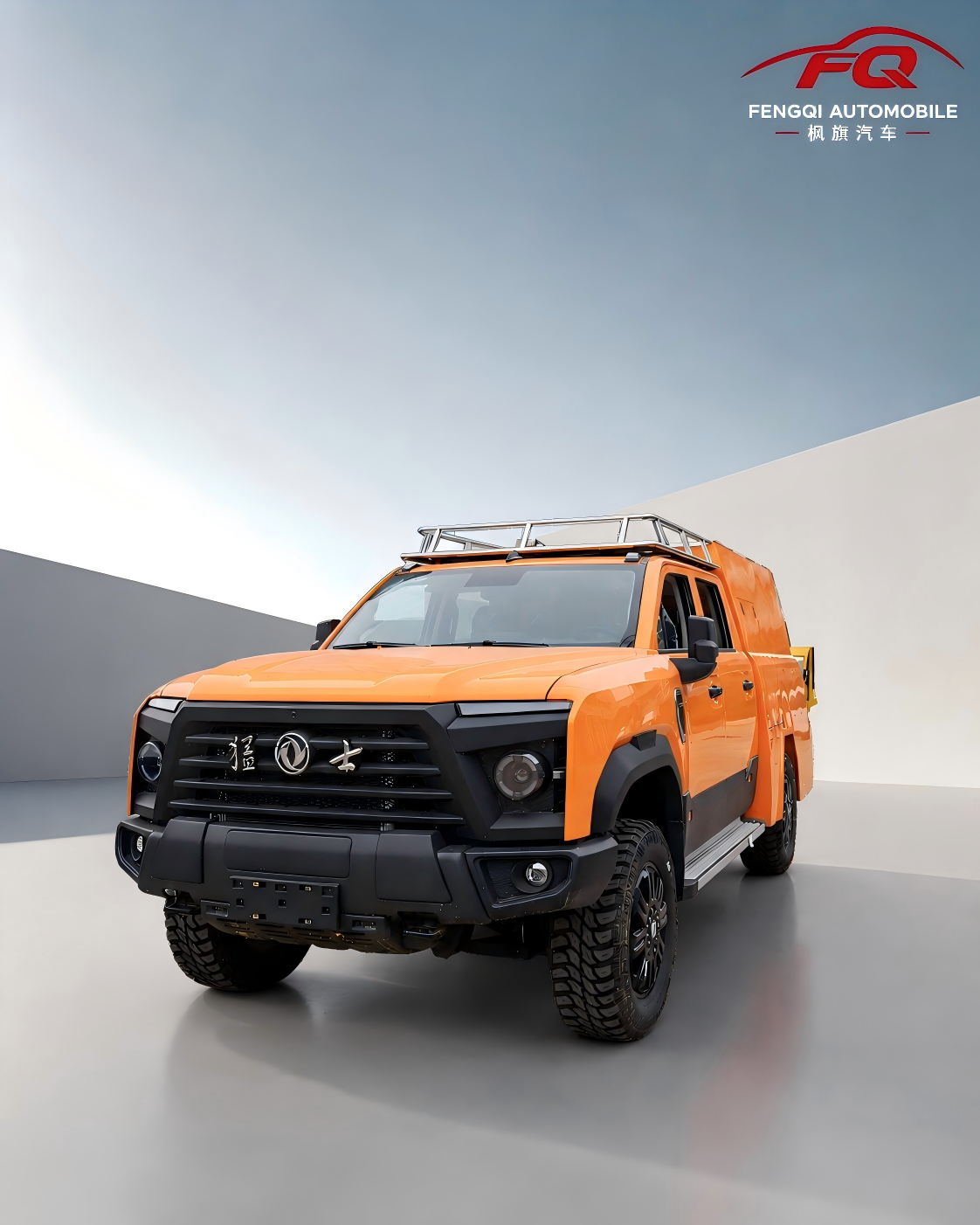
Ask what integration means and most answers start with the equipment. That is the wrong end of the problem. On a rescue vehicle it starts with a simpler question: does anyone have to work inside this box?
Start with who uses the box
Not seats for riding. Working space. Whether people stand, move and operate inside the body — or only reach into it — decides more about the layout than any item on the equipment list.
Three cases, and they produce three different vehicles.
The box only carries equipment. Nobody works inside. Then the question is how a person gets to it: through a door from outside, or by climbing in. That answer sets the door format, how deep the racking can go, where the lights sit, whether you need a step and a handrail. A box you fetch from outside and a box you climb into are built differently, even when they carry identical kit.
People work inside, briefly. Someone goes in, does a job, comes out. Now you need an aisle, a workable area around the equipment, and a way in and out that works with hands full — step height, door width, something to hold. The detail that gets missed is posture: standing, crouching, or reaching over something to get at a control.
People work inside for a shift. That is a different vehicle. It needs a separate compartment, climate control, lighting, and room for both work and rest — not a box with equipment bolted into it.
The dividing line is not simply the number of seats or the hours someone spends inside. If a person is expected to stay inside for extended periods, operate equipment from a seated position, or use the vehicle as a workplace, the third case applies. Most buyers cannot place themselves in one of the three, and that is not a failure on their part — they have been specifying equipment, and nobody has asked them about the person who has to work inside. Asking it early is most of the value of a design review. It is also why we sort the emergency rescue vehicle types we build by who works inside them, not by the equipment list.
The large equipment sets the rules
Large equipment is not a question of size alone. It is equipment that cannot be moved by hand, is fixed in the body, and does the vehicle’s main job — a generator set, a pump, a compressor, a drone hangar.
Everything about it has to be settled early. Does the weight and footprint stay inside what the vehicle is allowed to be on the road? Where does that weight sit, and which axle carries it? What supplies it, and where does that supply run? How does someone service it once the body is closed up? And where does everything else go around it?
The axle-load and center-of-gravity questions come first — before the chassis is ordered, not after the body is drawn. We covered why the chassis has to be settled against the mission and the scene in the previous article; large equipment belongs in that same conversation. If a two-tonne unit is going behind the rear axle, that is a chassis decision, and it is made on day one.
Power and control follow the structure
Strong and weak current do not get routed wherever there is space left. Power, signal and control wiring all have to be planned around the equipment, the structure and the working areas — separation and shielding, plus a route that does not run through the place someone has to reach into. The structure decides most of this, which is why the box design has to be settled before the electrical layout is drawn.
Conflicts here are normal. They are found and resolved on the drawing — and the grounding clash between a generator and a UPS is what one of them looks like when it turns up late.
The review is what keeps changes small
A design is not finished when it is drawn. It gets explained to the customer, questioned, adjusted, and only then released to production. That review is not a formality.
Here is what it is for. On a drone carrier we built — a hangar integrated into a Mengshi chassis, designed to launch three UAVs — the hangar supplier came back mid-build with a new feature on their next-generation product: an automated arm to handle the aircraft. It would not fit the space that had been signed off. The only way to have it was to tear the compartment out and do the whole layout again.
That was not acceptable, and it did not happen. The arm goes on the next product, not on this truck.
This is the part buyers rarely see. Suppliers iterate on their own schedule; your vehicle has one design freeze.
A feature that arrives after that freeze is not a change — it is a different vehicle.
Which is why major changes are rare. Once a layout is approved, a change that touches the core is not an adjustment, it is a rebuild — and everyone at the table knows it. Day to day, changes are small: a bracket, a cable route, a panel position. That is normal and expected. What does not happen is the core layout being reopened after sign-off, because that is exactly what the review exists to prevent.
It is also the difference between custom upfitting and buying a standard product. A standard product has a fixed specification you accept. A custom build has a specification you agree to — and then build to.
What to settle before you order
- Who works inside the box, and for how long
- What the large equipment is, what it weighs, and where it sits
- How it is powered and how it is serviced
- Where strong and weak current run, and what they have to be kept away from
- What must be fixed before the design is released to production
Get those five on the table and the design review becomes a confirmation instead of a negotiation. Send us the mission and the equipment — start from the emergency rescue vehicles we build, or talk to us about the spec — and we will check them against the chassis and the body before anything is cut.
A rescue vehicle is only as good as the space its crew can work in. That is decided here, not in the equipment catalogue.
Planning a build?
Tell us your operational requirements — we'll come back with an engineered proposal.
WeChat QR

WhatsApp QR