How Box-Body Design Shapes an Emergency Rescue Vehicle
Box-body design decides what an emergency rescue vehicle can do. From function-first layout to expandable structures that double the workspace — how the box is built matters.
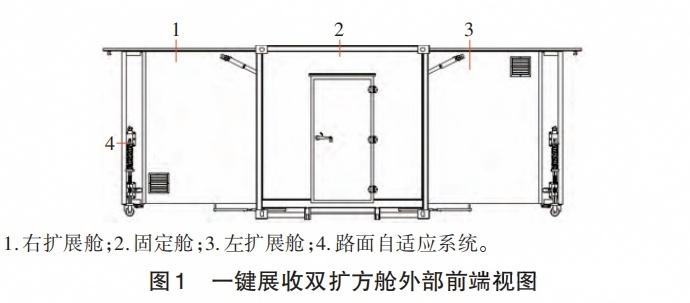
An emergency rescue vehicle spends most of its life on the road looking like any other truck. Then it stops, and the box opens into a workspace — a command post, a treatment area, a repair bay. That transformation does not happen by accident. It is decided long before the first panel is welded, on a drawing board where the mission meets the metal.
This is the part of the build most buyers underestimate. The chassis gets the attention. The box gets treated like a container. But the box is where the vehicle actually does its job.
Start with What the Box Must Do
Before anyone picks a material or a dimension, the question is simple: what has to happen inside this box?
- Does it carry equipment, or do people work inside it?
- How many? Standing or seated?
- Does it need to deploy fast, or can it be set up over an hour?
- Does the work happen in a desert, on a slope, in the rain?
A box that only transports gear is a different animal from a box people live and work in for a shift. The second one needs headroom, floor strength, climate control and a layout a tired operator can move through in the dark. Most of these requirements do not appear in a standard cargo-body specification — which is why we group the emergency rescue vehicle types we build by mission rather than by box size.
A Standard Box Is the Starting Point, Not the Answer
Most special-purpose vehicles begin with a standard cargo box as the base. That is fine as a starting point. It is not the answer.
The real design work happens when you separate two states: the transport state (how the box behaves on the highway) and the working state (what it becomes when parked). A plain box optimizes only the first. A purpose-built box is designed for both — and the second state is usually what decides the structure.
For a rescue vehicle, the working state often matters more than the transport state, because that is where the vehicle delivers its actual mission. Separating the two states is what turns a plain box into a working space — the same point made in our note on a custom cargo box redesign.
Materials Are a Trade-Off, Not a Default
Walk through any upfitter’s yard and you will see the same debate: aluminum skin over a steel frame, honeycomb sandwich panels, polyurethane insulation, composite floors.
None of these is “best.” Each is a trade-off:
- Aluminum is light and corrosion-resistant, but costs more and is harder to repair in the field.
- Steel frames are strong and relatively easy to repair, but they add weight — a more significant consideration on new-energy platforms where mass directly affects energy consumption and usable range.
- Sandwich panels buy stiffness per kilo, but constrain how you attach things.
The right answer depends on the mission, not on a catalog.
Change the Structure, Change the Space
This is where box design gets interesting. The same road footprint can hold very different working volumes, depending on how the structure is built.
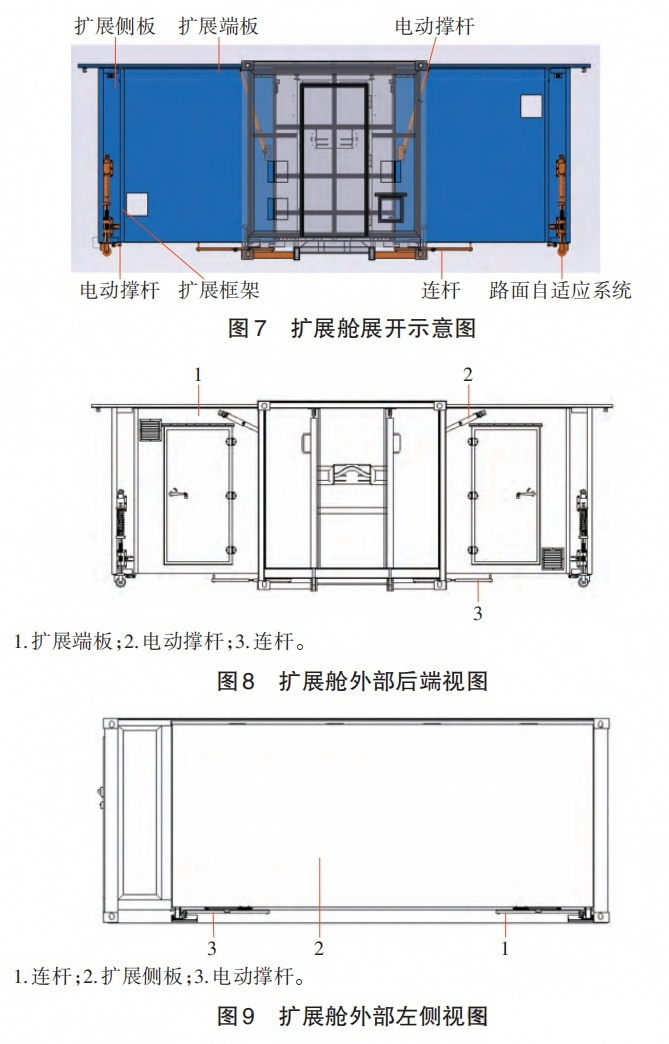
Take an expandable shelter we build: in transport it retracts to 2,438 mm wide, keeping the body within a 2,550 mm overall-width design limit used for the applicable road-vehicle configuration in China. Deploy it, and side panels unfold to substantially increase the floor area. Same transport footprint, but substantially more usable working space when deployed.
That is not a feature you add at the end. The expandable structure — the folding panels, the actuators, the locking points, the leveling feet for uneven ground — has to be designed into the box from day one. Structure change is what creates the space. The same principle drives our shelter and expandable container range, where the transport footprint stays fixed and the working volume does not.
Stiffness Has to Be Checked, Not Assumed
A box that unfolds or carries heavy gear cannot be judged by eye. We use finite-element analysis to check bending, torsional and braking load cases and identify where the structure may approach its design limits — the same family of methods used to validate a bus body.
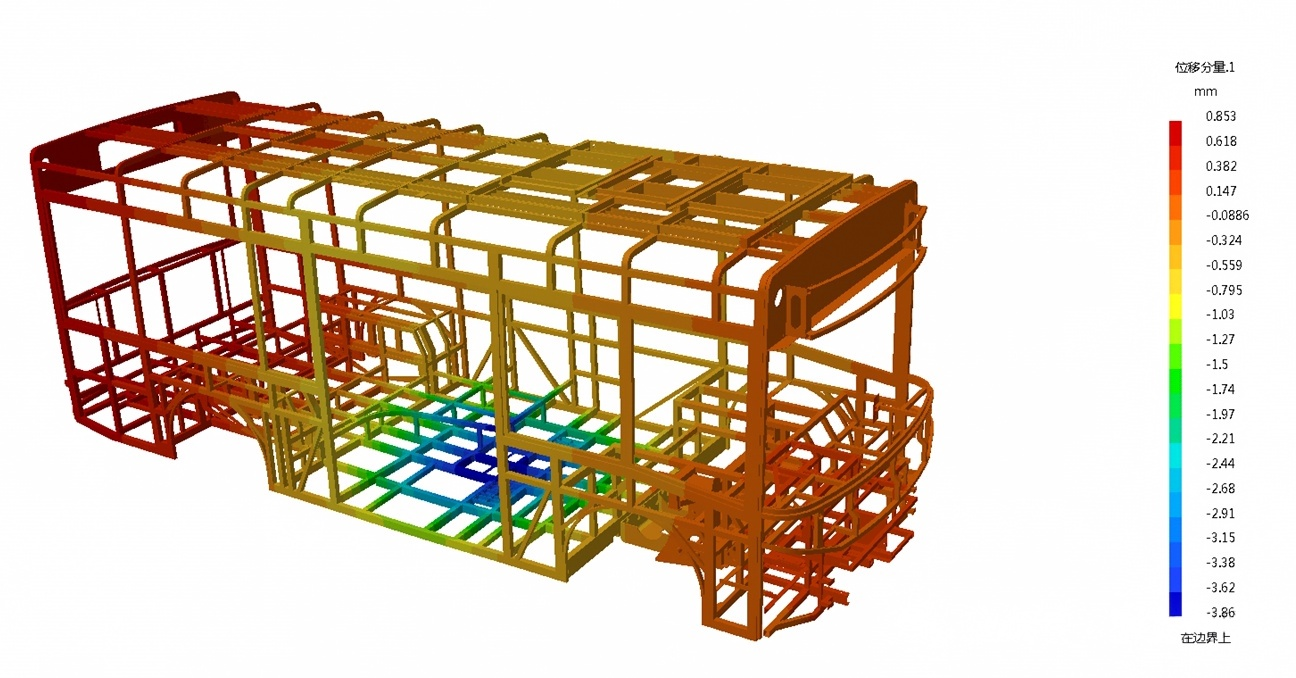
The point is not the report. The point is knowing which member will flex first, and whether it matters. A floor that deflects under a generator, a wall that racks when the shelter is half-open on a slope — those are the failures you find on the computer, not in the field.
The Body Meets the Chassis
None of this works if the box does not sit correctly on the chassis. Mounting points, lifting and leveling hardware, power take-off, wiring routes — this is the first engineering layer above the chassis we covered in the previous article.
Settle it early. A box designed without the chassis in the loop ends up with mounting conflicts, weight in the wrong place, and a center of gravity nobody planned for.
Settle the Body Before the Equipment
There is a temptation to spec the equipment first and fit the box around it. Resist it. The box is the envelope; the equipment lives inside it. Get the structure, the access, the environment and the interfaces right first, and the equipment layout becomes a straightforward exercise instead of a fight.
For a custom emergency rescue vehicle, body design should be settled around the mission, working state, structural loads, access requirements and chassis interfaces before equipment installation begins.
A rescue vehicle is only as good as the space its crew can actually use. The chassis moves it. The box lets it work. If you are settling a body now, talk to us about the spec before the equipment list is fixed.
Planning a build?
Tell us your operational requirements — we'll come back with an engineered proposal.
WeChat QR

WhatsApp QR