Why a Command Vehicle Can Look Like a Motorhome — But Is Not One
Similar seats and cabinetry hide different purposes. Compare mobile command vehicles and motorhomes through workflow, communications, power and equipment integration.
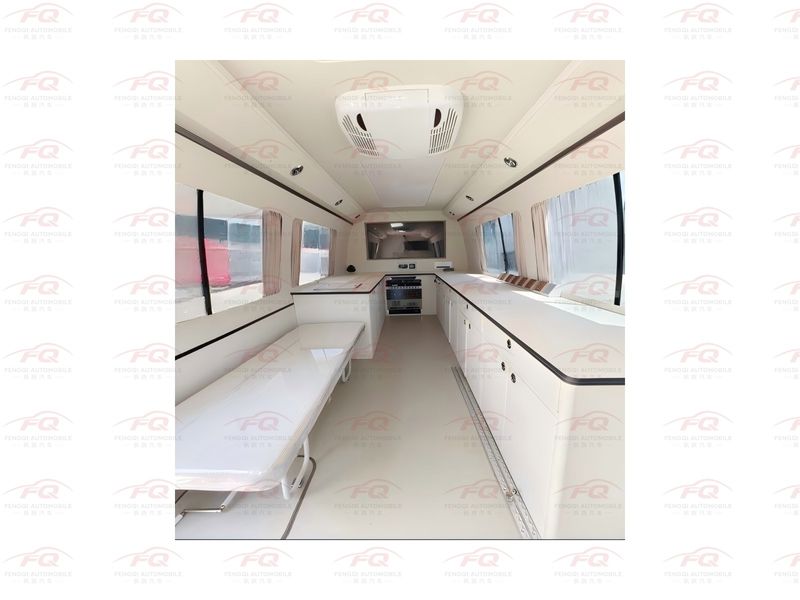
A table, upholstered seating, cabinets and air-conditioning can make a mobile command vehicle look like a motorhome. Some command vehicles also provide rest facilities for a crew working away from base. The resemblance is understandable, but it does not make the two products interchangeable.
A command vehicle is a mobile workplace for coordinating an operation. A motorhome is primarily a mobile living space. The difference starts with what people must accomplish inside, rather than how the furniture looks.
Why the exterior may resemble a motorhome
In some projects, a restrained, motorhome-like exterior is intentional: the customer wants fewer visible cues to the vehicle’s operational role. This is a project-specific appearance requirement, not a characteristic of every command vehicle. Other command vehicles deliberately use clear emergency-service markings.
Inside, tables, seats, cabinets and air-conditioning also resemble familiar living-space fittings. But these items serve a different purpose. A well-engineered motorhome can be highly complex; the distinction is the operating brief, not which category is better built.
A command vehicle is an information hub
The vehicle brings together information from the field, communication links and the people making decisions. Depending on the project, this can involve numerous communication devices, network equipment, displays, conferencing equipment and operator consoles. It is a place to receive, share and discuss information, rather than simply transport the team.
The equipment also uses space that an interior photograph may not show. Roof-mounted antennas, communication equipment, cameras and other selected systems compete for roof area. Their locations need to be considered together with the body and internal equipment layout. The exact roof equipment depends on the project; it is not a universal package.
Command vehicle: coordinate the operation
Workstations, information displays, communication interfaces and meeting space are arranged around the team’s task. Equipment access and circulation remain part of the usable space.
Motorhome: support life on the road
Living, sleeping, cooking and washing facilities are arranged around accommodation and travel. Similar furniture does not mean the same operating priorities.
Meeting seats are for discussion, not primarily leisure
The meeting room and its seats support briefings, concentrated discussion and joint decisions. Comfort matters for prolonged work, but leisure comfort does not come first: seating positions, usable table space, sightlines and access must serve the discussion.
In a command vehicle, the layout must account for who uses a screen, who talks to whom, how operators reach their controls and how people move past occupied seats. Equipment cabinets also need usable access for inspection and maintenance.
The available space cannot be counted twice. A room photographed with chairs tucked away does not show whether several people can actually work there together. The layout should be reviewed in its operating state as well as its transport state. Seats used while driving are a separate safety and approval question from seating used when parked.
The equipment must work together
Installing individual devices is different from agreeing how the completed system will operate. Power connections, data interfaces, equipment placement, cooling and maintenance access need to be coordinated around the selected equipment.
The delivery arrangement varies. A buyer may appoint separate vehicle and equipment suppliers. Alternatively, an equipment company or converter may lead the project, or the vehicle may be a subcontract within a larger programme. In each case, the parties need to agree who supplies, installs, configures and verifies each interface. An attractive interior photograph cannot establish that responsibility.
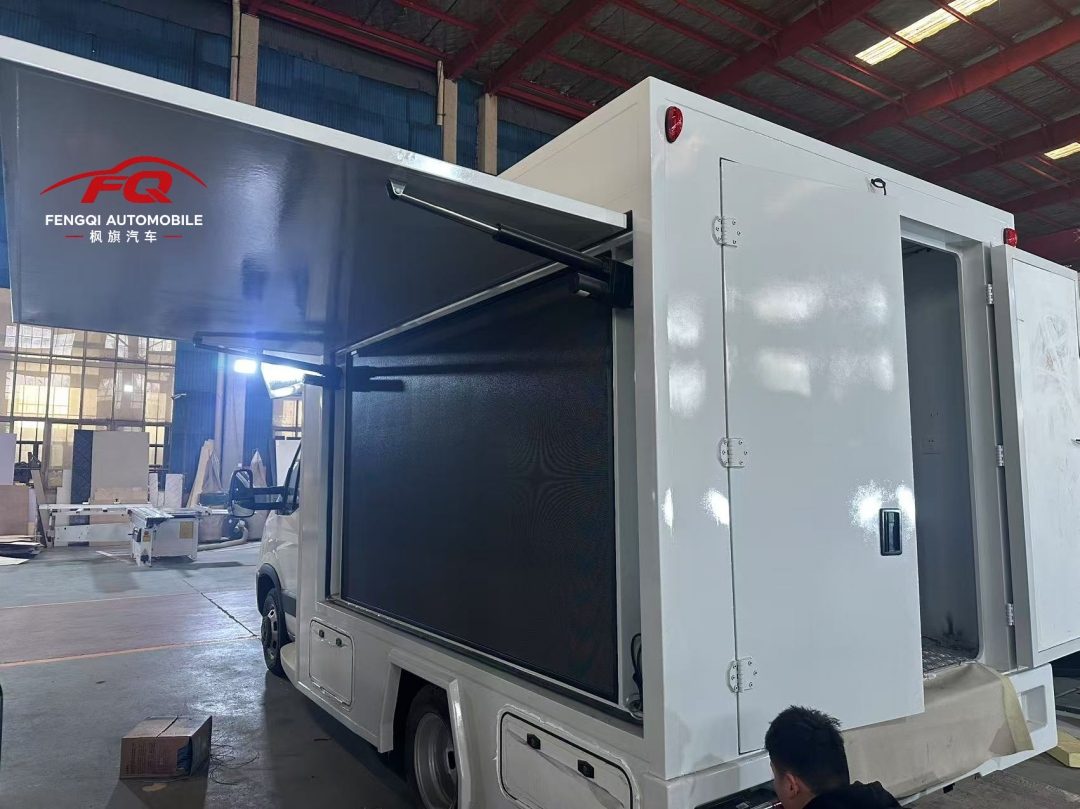
An external display is one example of mission equipment that affects deployment space and vehicle loading. It is not a standard feature of every command vehicle.
Rest facilities support the mission; they do not define it
A crew may need a place to rest, eat or stay on site. Including these facilities does not turn a command vehicle into a motorhome. Conversely, adding a radio and a monitor to a living area does not by itself establish a complete command capability.
The useful question is whether the layout and integrated systems support the agreed operation for the intended team and working duration.
What should a buyer specify first?
Start with the task, number of operators, briefing requirements, expected time on site and equipment list. Identify which equipment is already selected, who supplies it, and which interfaces still need confirmation. Then assess the chassis, usable space, payload and power requirements together.
See our command and communication vehicles for actual platforms and project layouts. For the relationship between equipment location and loading, read command vehicle layout and axle load. A quotation checklist helps structure an initial brief.
Planning a build?
Tell us your operational requirements — we'll come back with an engineered proposal.
WeChat QR

WhatsApp QR