Where the Weight Goes: Command Vehicle Layout and Axle Load
Total weight is not the question on a command vehicle. Where the equipment sits decides what each axle carries — and what the truck does on a slope.
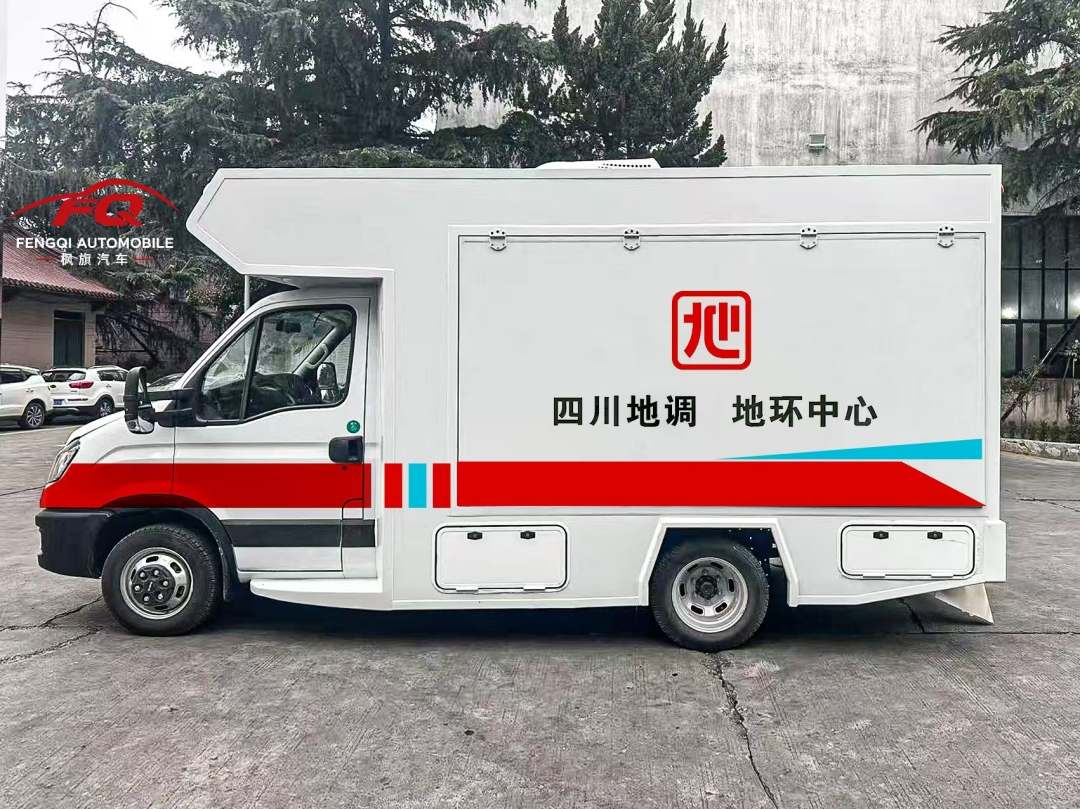
A command vehicle carries an outdoor screen, a generator, a battery bank, a rack of equipment — and a crew. Fitting all of it in is not the hard part. Deciding where the weight sits is.
Two axles carry everything. Move a heavy item forward and the front axle takes more of it. Move it back and the rear axle does. The total does not change. Steering, braking, and how the vehicle sits on a slope do.
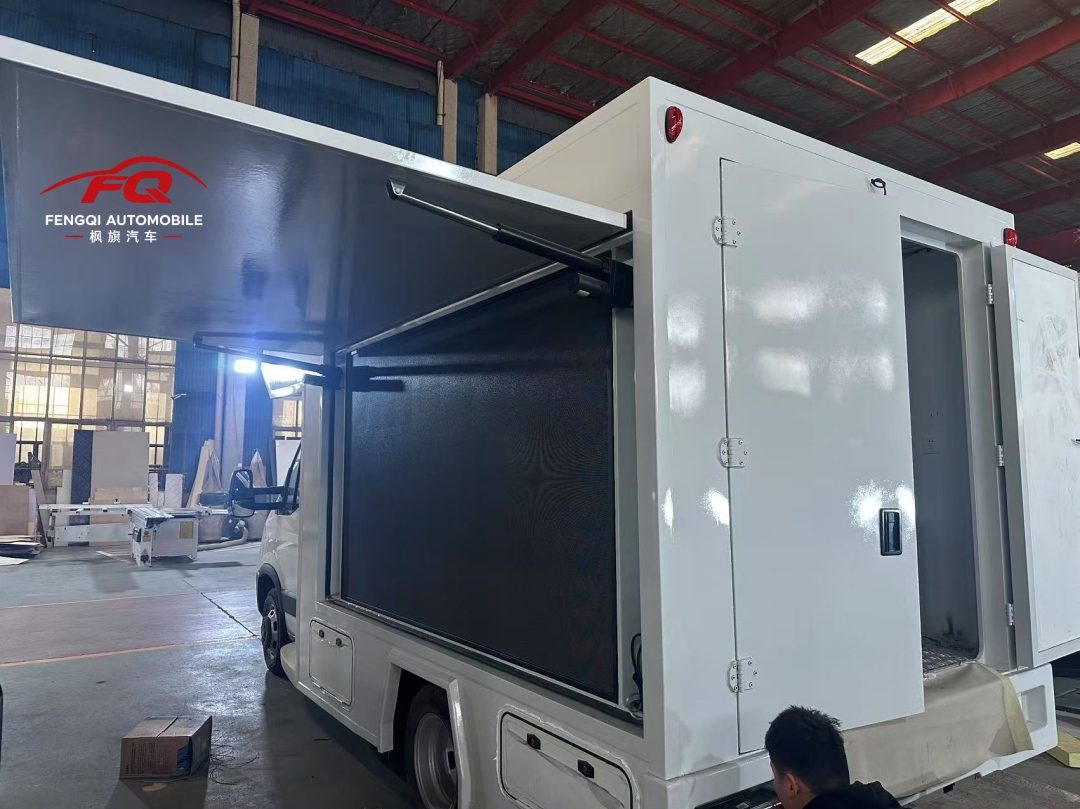
Why total weight is the wrong question
Weight is easy to talk about because weight can be weighed. Put the vehicle on a scale and the answer arrives in one number, and that number is either inside the limit or it is not.
What that number does not tell you is how it is shared.
A vehicle can be inside its gross limit and still be badly loaded. If the heavy items end up behind the rear axle, the rear axle carries a share it was not proportioned for and the front axle carries less than it should. Nothing is over the limit. The vehicle is still wrong.
This is why “will it be overweight” is a narrow question. The question that matters is what each axle ends up with, and whether the split between them makes sense.
Two axles, and everything between them
Front and rear axle load is a matter of position, not of quantity.
Every item on board has a position along the vehicle, and that position decides which axle carries it and how much of it. A battery bank a metre further back is a different vehicle from the same battery bank a metre further forward — same total, different axle loads.
Three things follow from it:
Steering. The front axle is the one that steers. Take too much load off it and the front tyres have less to work with, and the steering goes light in a way the driver feels before anybody measures it.
Braking. Braking force is shared according to where the mass is. Shift the balance backwards and the vehicle does not stop the way it was designed to.
Slopes and broken ground. A command vehicle does not spend its life on flat tarmac. One built for earthquake response is expected to reach places where the road itself is gone. On a side slope, or with one wheel in a rut, the margin you have left is the margin the layout left you — not the one the spec sheet promised.
The space is not all yours
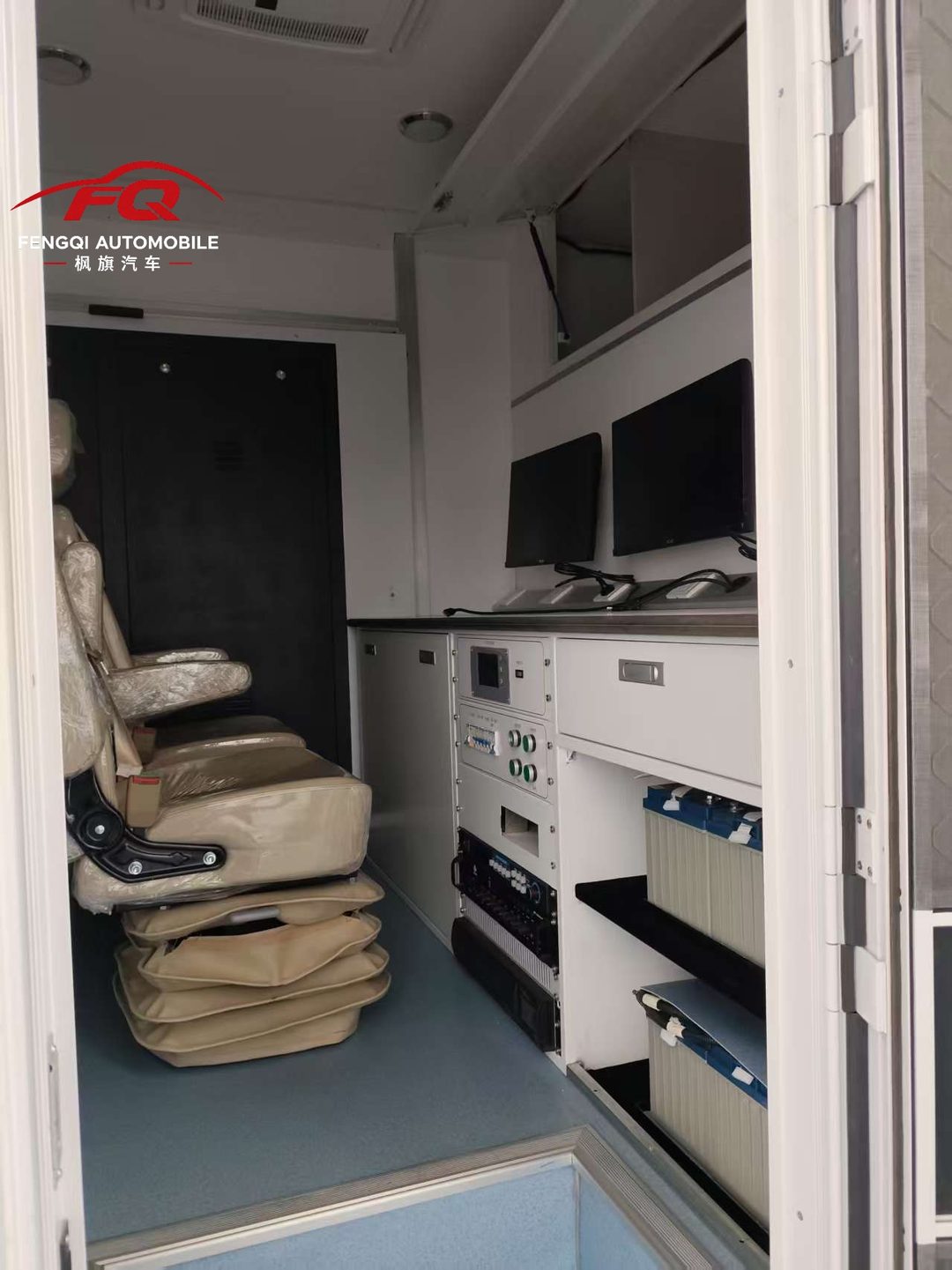
A command vehicle is not a cargo box. There is a working area in the back, and people who have to stand up and do a job in it.
That is the second constraint, and it pulls against the first. Axle load wants the heavy items in particular places. The crew needs the space those places might be in. The layout has to satisfy both, and the space only exists once.
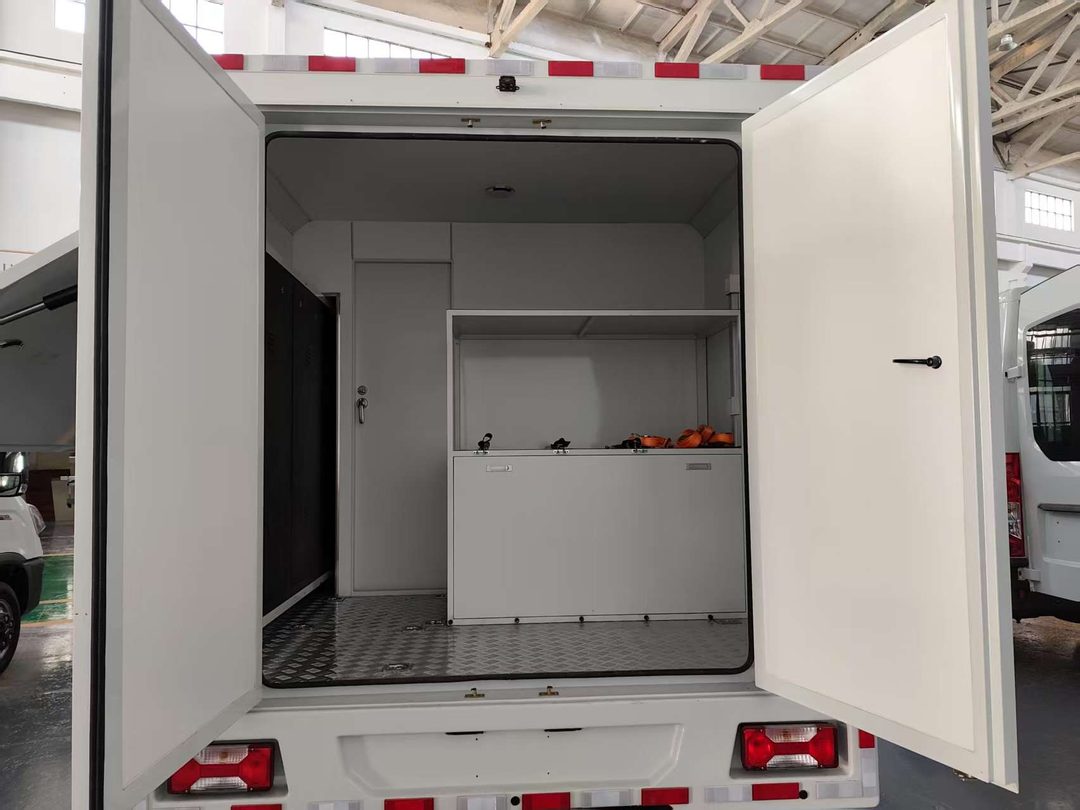
The first move is always the same: put the heavy things where people are not. Battery bank and generator go low, into volume the crew does not use. The working area stays clear and stays in the middle. Where that runs out, something gets compromised — a bracket moves, a unit splits, an access panel gets smaller.
What does not happen is the safety side giving way to make the layout easier.
Settled in design, not during the build
Layout is fixed while it is still a drawing.
That is partly arithmetic — position, mass, what each axle ends up with — and partly structure. Where the loads are high enough, or the mounting is unusual enough, the load paths get checked properly, including finite element analysis (FEA) on the subframe, the brackets and the fixing points.
Layouts do move during a build — that is normal on an integration job. Axle load is not one of the things allowed to move with it.
The reason it happens then is simple. Once steel is cut and the body is on, there is very little left to move. A layout problem found at design stage is a change on paper. The same problem found at trial fit is a change to a vehicle that has already been built — and on a vehicle that has to reach an earthquake zone, the route in is often the part that has already failed.
The four lines that do not move
Not one number. Four, and none of them are preferences:
Neither axle goes over its limit. The chassis maker publishes what each axle may carry. Those are limits, not targets.
The split between front and rear has to make sense. Staying legal on both axles is not the same as being loaded correctly. The proportion between them is what decides how the vehicle drives.
Every load path has to hold. Subframe, brackets, and the points where the body and the equipment are fixed. This is what the analysis is mostly for — not whether a part is strong in isolation, but whether the load gets into the chassis the way the chassis was designed to take it.
The vehicle still has to pass as a whole. Not component by component. Axle loads, braking, and the rest of it, checked together against the standard the vehicle has to meet.
What we need before the layout starts
Four things, and all four matter more the earlier they arrive.
Measured weight and dimensions. Not the datasheet. A unit that weighs more than its documentation says, or needs more room around it than the drawing shows, changes the layout — and it changes it after the layout was agreed.
What each unit needs around it. Cooling air, exhaust routing, which way the door opens, how far the cables can run, whether it needs anti-vibration mounting. These are not preferences. They decide where a unit can go at all.
Who is in the back, and what they do. How many people, what they operate, how they move through the compartment. That is what tells us which volume has to stay clear.
What cannot move, and what can be split. If something has to sit in a particular place, we need to know before the layout is drawn, not after. And if a battery bank can be split into two smaller banks in two positions, that is a way of putting weight where it helps rather than where it fits. How large the bank has to be is not a layout decision — it comes out of what the equipment actually draws.
Where this lands
The people specifying a command vehicle know their mission. They know the drone, the mapping system, and what the team on the ground needs to see. The vehicle is not their trade — most buyers have no reason to have a feel for axle load, and it would be strange if they did.
So this is raised on our side, and it gets raised while the layout is still a drawing. What the customer gives us early is what we can still work with. What arrives after the body is on is a problem with very few options left.
Layout is engineering, not fitting. It is also the part that decides whether the vehicle gets to the site and still works when it does.
Specifying a command vehicle? Send the equipment list with measured weights and dimensions before the layout is frozen.
Planning a build?
Tell us your operational requirements — we'll come back with an engineered proposal.
WeChat QR

WhatsApp QR