Display Vehicle Power: What to Settle Before the Build
Screens and demo loads need 220V. A vehicle gives you 12V or 24V. How mobile display vehicles get power, and what to settle before the chassis is ordered.
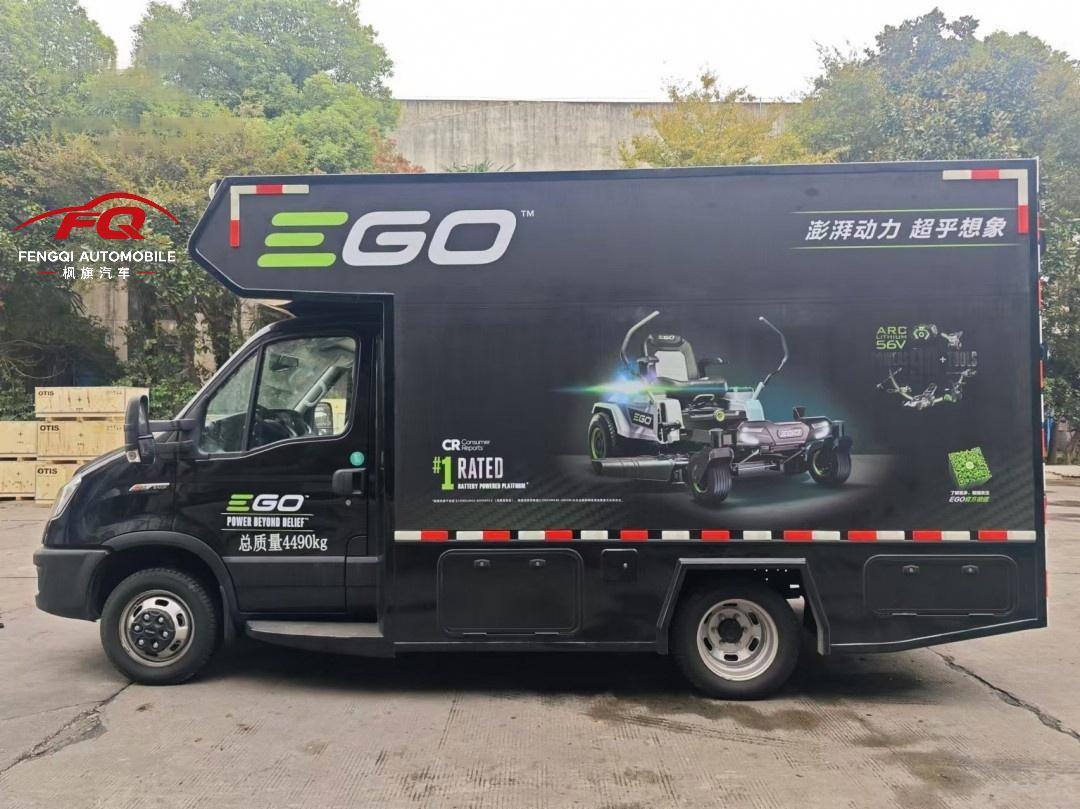
Spec a mobile display or demonstration vehicle and the power question is not “how much”. It is “where does it come from”. The vehicle gives you 12V, or 24V on some chassis. What goes in the back — screens, sound, lighting, demo equipment — runs on mains voltage. That gap is the whole electrical design, and it has to be closed before the body is built, not after.
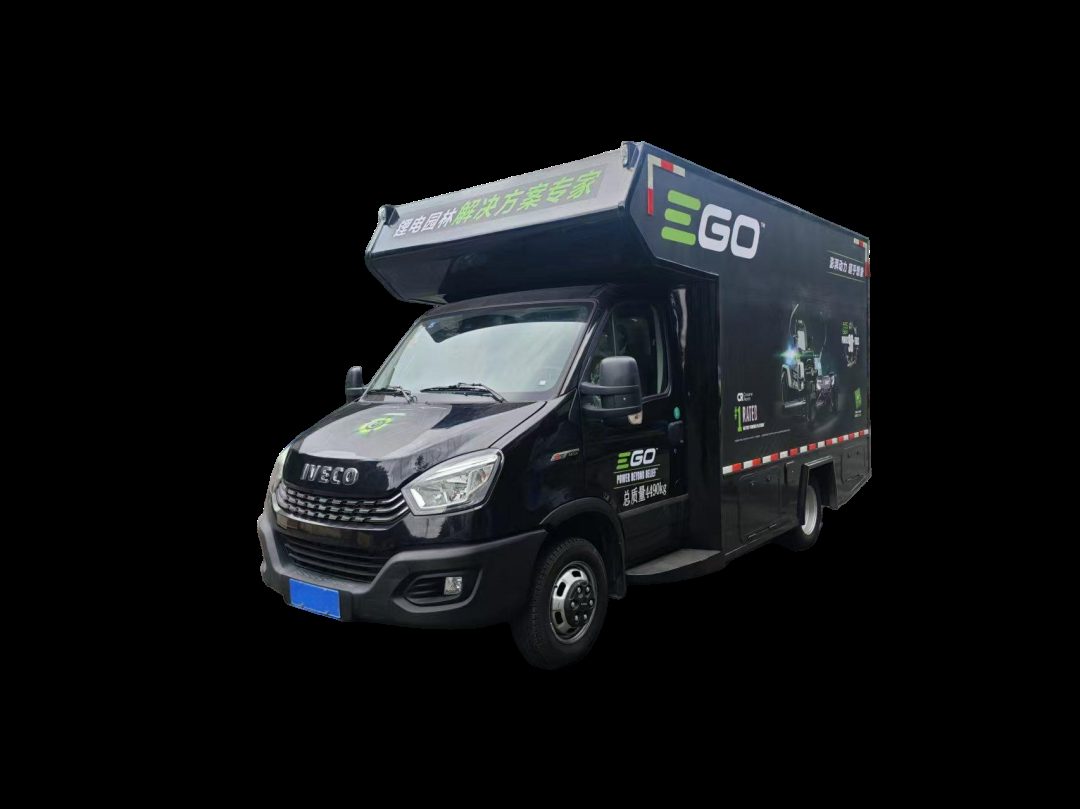
What the vehicle gives you, and what the back needs
A standard vehicle electrical system is 12V on light vans and light trucks, and 24V on many medium and heavy chassis. It is sized for starting, lighting, and the loads the vehicle was designed to carry.
It is not sized for a compartment full of equipment. Interior lighting and small accessories can run on the vehicle system. Screens, sound systems, printers, coffee machines, refrigerated display units and power tools cannot. Those need 220V (or 110V, depending on the market — worth confirming early, because it changes the whole build).
A fixed exhibition stand plugs into a wall. A vehicle that drives to a customer’s site cannot.
Sizing the demo load
The load is not a guess, and it is not the sum of every nameplate rating on the equipment list. It is what runs at the same time.
On one display vehicle we built for a hand tool maker, the demo load worked out at around 1500W: screens, sound, and charging lithium tool batteries. Conversion losses sit on top of that. The supply behind a 1500W load has to be nearer 2000W. That number drove every decision after it — inverter size, battery capacity, and how the vehicle had to be used.
What we need from a buyer is the equipment list with the actual units going in the back, and which of them run at once. A catalogue is not enough, because the catalogue does not say what the unit draws in use. The same gap opens up on detection and inspection vehicles, where the instrument list is never the whole load.
Four ways to get mains voltage on board
A generator set with its own engine. The obvious answer, and on a display vehicle usually the wrong one. It has to start up somewhere, and on this kind of vehicle that somewhere is next to the visitors. Noise, exhaust routing and fuel storage come with it. For a mobile showroom it is generally ruled out before the costing starts.
A second generator driven off the engine. No separate engine, so nothing starts up. It is quiet, and it makes power whenever the engine is running. It adds cost and it loads the engine. The point that usually settles it: once the battery bank is sized to run the demo on its own, this generator is paying to do a job the stored power is already doing. On the display vehicle described here, that is why it was left out.
Mains inlet, battery bank, inverter. The common route. An external mains inlet charges a battery bank while the vehicle is parked and plugged in. An inverter turns that stored DC into 220V AC for the compartment. On the tool maker’s vehicle this was a mains inlet, a 3000W inverter, and a bank of lead-acid batteries.
Charging from the vehicle’s own alternator. This is where most expectations go wrong. On a 12V system the alternator does not have enough output to fill a working battery bank. A split-charge relay lets the alternator top the bank up while the vehicle is moving, which is useful, but it is a top-up. It is not a charging solution.
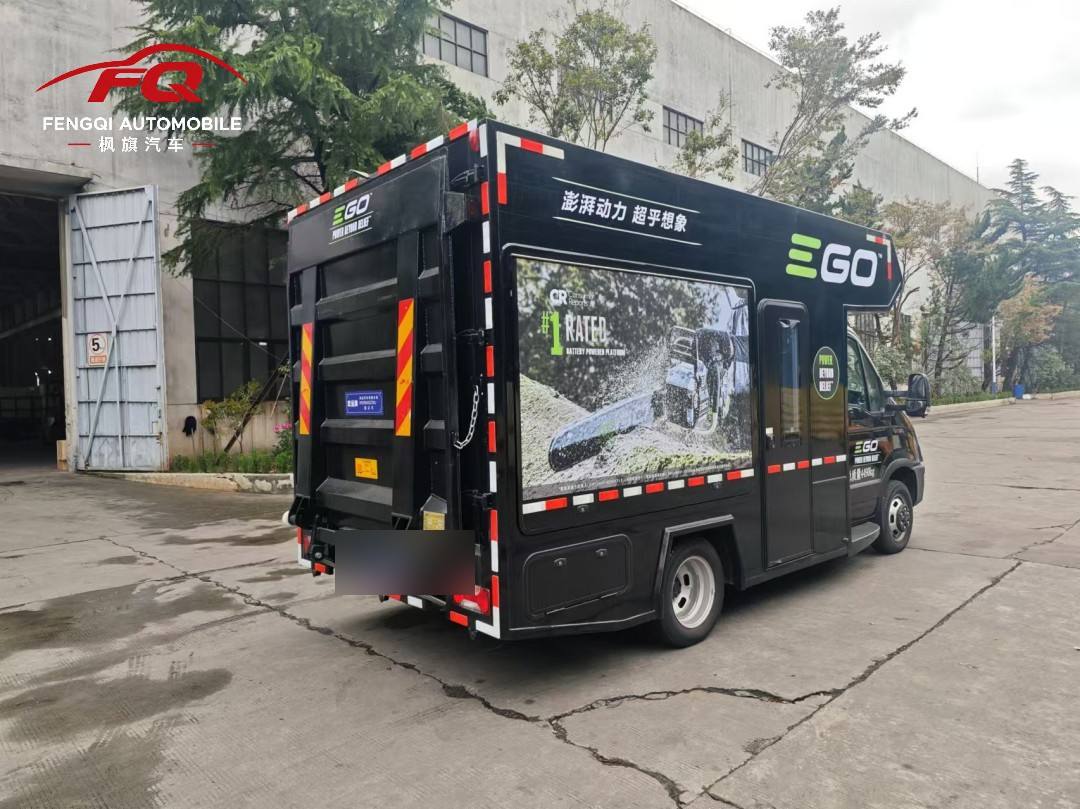
How a battery-based system actually gets used
On a display vehicle the battery bank is not an upgrade. Without storage the engine has to keep running to make the power, which brings back the noise and the exhaust that ruled out the generator set in the first place. Storage is what lets the vehicle stand quietly and still work.
On the tool maker’s vehicle the bank came out around 200Ah. On a 12V system that is a little over 2kWh of stored energy. With lead-acid the working figure is roughly half of it, so a 1500W demo has about an hour before something has to plug in.
That number is why the first question matters. A vehicle that parks somewhere with mains every night and a vehicle that does three days of rural stops are not the same build, and the difference is measured in battery capacity, not in inverter rating.
This is the part that gets missed, and it is the part that decides whether the vehicle works on the day.
You plug in where you can, and fill the bank before the day starts. You then run on the bank. The alternator helps while you drive, but it does not refill what the demo used. And across several days with nowhere to plug in, the bank is all you have.
So the operating pattern matters as much as the hardware. A vehicle that parks at a site with mains available every night needs a very different battery bank from one that does three days of rural stops with no supply.
What to settle before the body is built
- Is there mains where the vehicle parks? This is the first question, and it sets the battery size.
- How long does it have to run between charges? One demo, or a full day, or three days off-grid?
- What runs at the same time, and what is the peak? Not the nameplate total.
- 110V or 220V? It depends on the market the vehicle will be registered and used in — the same answer that decides the chassis.
- Where does the battery bank go, and what does it weigh? Battery mass sits on the axles like any other payload, and where it sits decides what each axle carries. It has to be inside the legal limits for the country it will be registered in.
Battery capacity, inverter rating and the mains inlet are not accessories to be chosen at the end. They take space, they take mass, and both have to be designed into the body from the start.
Getting it sized before the chassis is ordered
Power is the part of a display vehicle that is invisible on a drawing and expensive to add later. The equipment list and the operating pattern decide it, and both are known — or can be established — before anyone orders a chassis.
Send us the equipment list and how the vehicle will actually be used — start here. We will size the power system and check it against the chassis and the axle limits before the build starts.
Planning a build?
Tell us your operational requirements — we'll come back with an engineered proposal.
WeChat QR

WhatsApp QR