DR / CT
Mobile DR X-ray vs CT: vehicle space and radiation shielding
Both use X-rays. They produce different images and need different working spaces. Choose the examination first, then the equipment and vehicle.
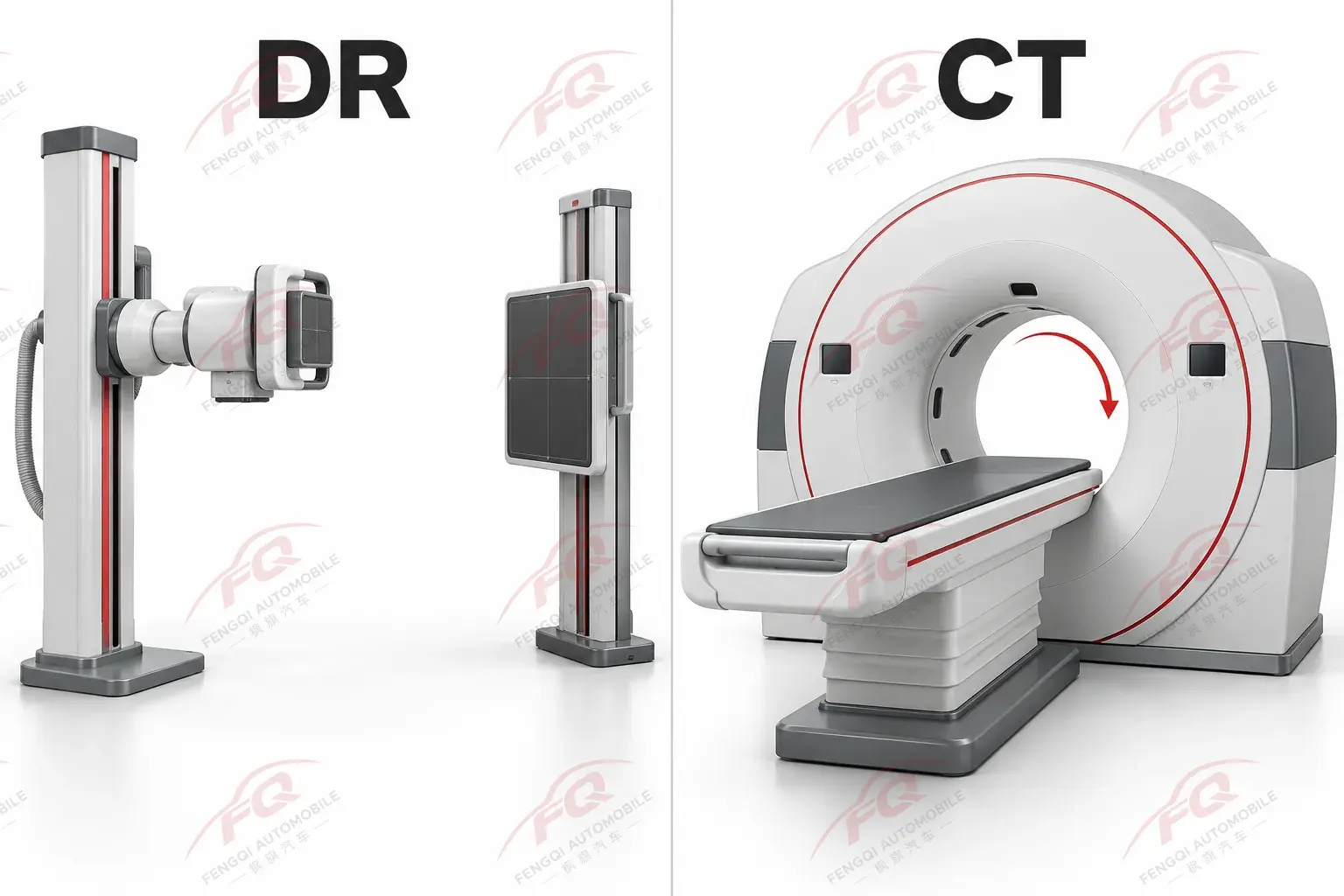
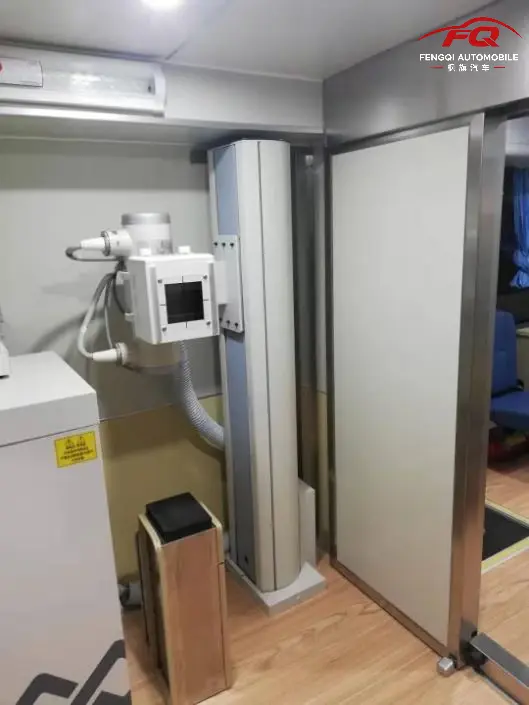
DR: digital projection radiography
In ordinary DR photography, an X-ray tube exposes a digital detector through the patient to create a two-dimensional projection. The tube, patient and detector are positioned for each view; the exposure is usually brief. This is different from continuous fluoroscopy.
CT: computed tomography
In conventional clinical CT, the X-ray source and detector assembly rotate around the patient. A computer reconstructs measurements from different angles into cross-sectional images. The patient table and gantry form a working system; CT is not simply a larger DR unit.
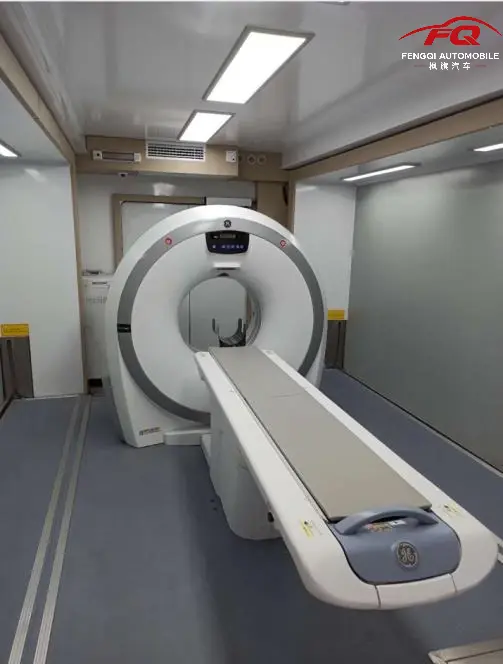
Why can DR fit a van while CT usually needs a larger platform?
Some compact DR configurations can fit a wide-body van, depending on the examination positions and patient access. A conventional whole-body CT system usually requires more space for its gantry, table travel, staff access and associated equipment. Its mass and concentrated loads also affect platform selection. Large trucks, trailers or dedicated shelters are therefore common options. These are typical patterns, not absolute rules: compact CT systems and larger DR vehicles also exist.
Why is a shielded examination room needed?
Both DR and CT use ionizing X-rays. A shielded examination area limits exposure outside the imaging room, including exposure from scattered radiation. Lead is a common shielding material, but a “lead room” is a complete protective enclosure, not just a sheet behind the machine.
- Walls, floor and roof form the shielding envelope.
- Doors, observation windows and service openings must be considered together.
- The required protection depends on the equipment, examination workload, surroundings and destination requirements—not a universal lead thickness.
Do CT rows or slices determine the vehicle?
No. Detector rows and reconstructed image slices are different specifications. Neither alone establishes equipment weight, vehicle size or platform requirements. Compare the exact equipment model and the complete project scope; do not choose a chassis from the advertised slice count alone.
Common buyer questions
Can any van become a mobile X-ray unit?
No. The selected examination and equipment must fit the usable space, patient access and completed vehicle weight, including shielding.
Does a CT vehicle need more lead than a DR vehicle?
Not automatically. Shielding is assessed for the actual equipment, intended use and surrounding occupancy; the equipment name alone does not set thickness.
Is this an ambulance configuration?
No. An imaging vehicle provides an examination workspace. Ambulance patient transport and medical imaging are different functions.
Public references
References for imaging principles and radiation protection.