BUYER KNOWLEDGE
Truck chassis explained: chassis cab, axle layouts and cab options
The chassis carries the mission. Axles, cab space and powertrain must work with the finished body—not just the equipment list.
What is a chassis cab?
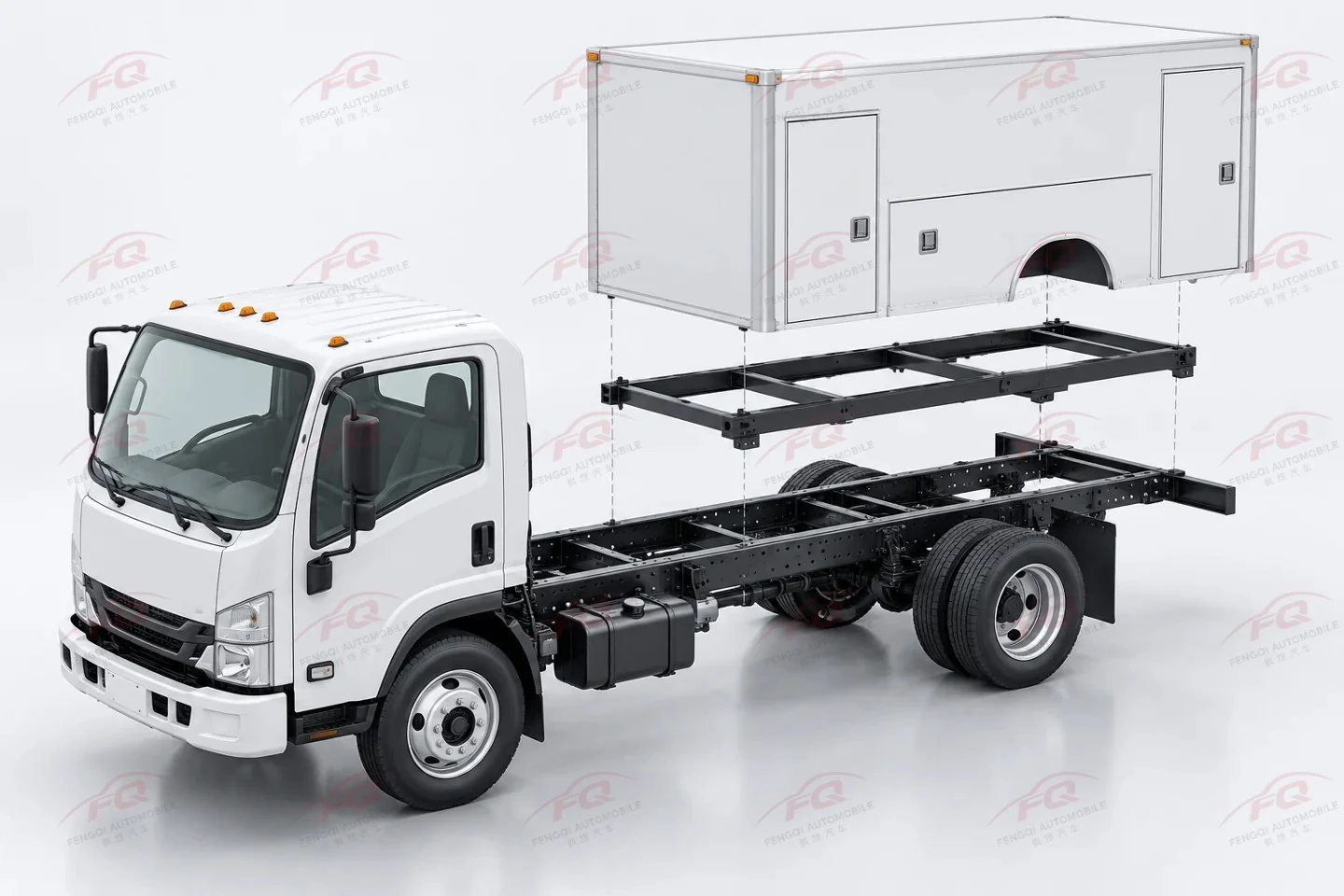
In Chinese vehicle manufacturing, a “second-category chassis” generally means the running chassis with its cab, before the cargo or specialist body is installed. For international enquiries, chassis cab or cab-and-chassis is clearer than “Class II”, which can mean something else in another market.
- 01Chassis cab: cab, frame and running systems
- 02Subframe and body mounting interface
- 03Specialist body and equipment
How to read 4×2, 6×2 and other axle formulas
The first number counts wheel positions; the second counts driven wheel positions. Each axle normally contributes two positions. Twin tyres on one side still count as one position—not two.
2 axles · 1 driven
2 axles · 2 driven
3 axles · 1 driven
3 axles · 2 driven
3 axles · 3 driven
4 axles · 2 driven
These are simplified drive-layout examples, not a steering or tyre specification. A 6×2 may have a leading or trailing non-driven axle; extra suffixes identify other arrangements. The formula alone does not establish payload, off-road ability, differential locks or wading capability.
Choose the cab around the crew
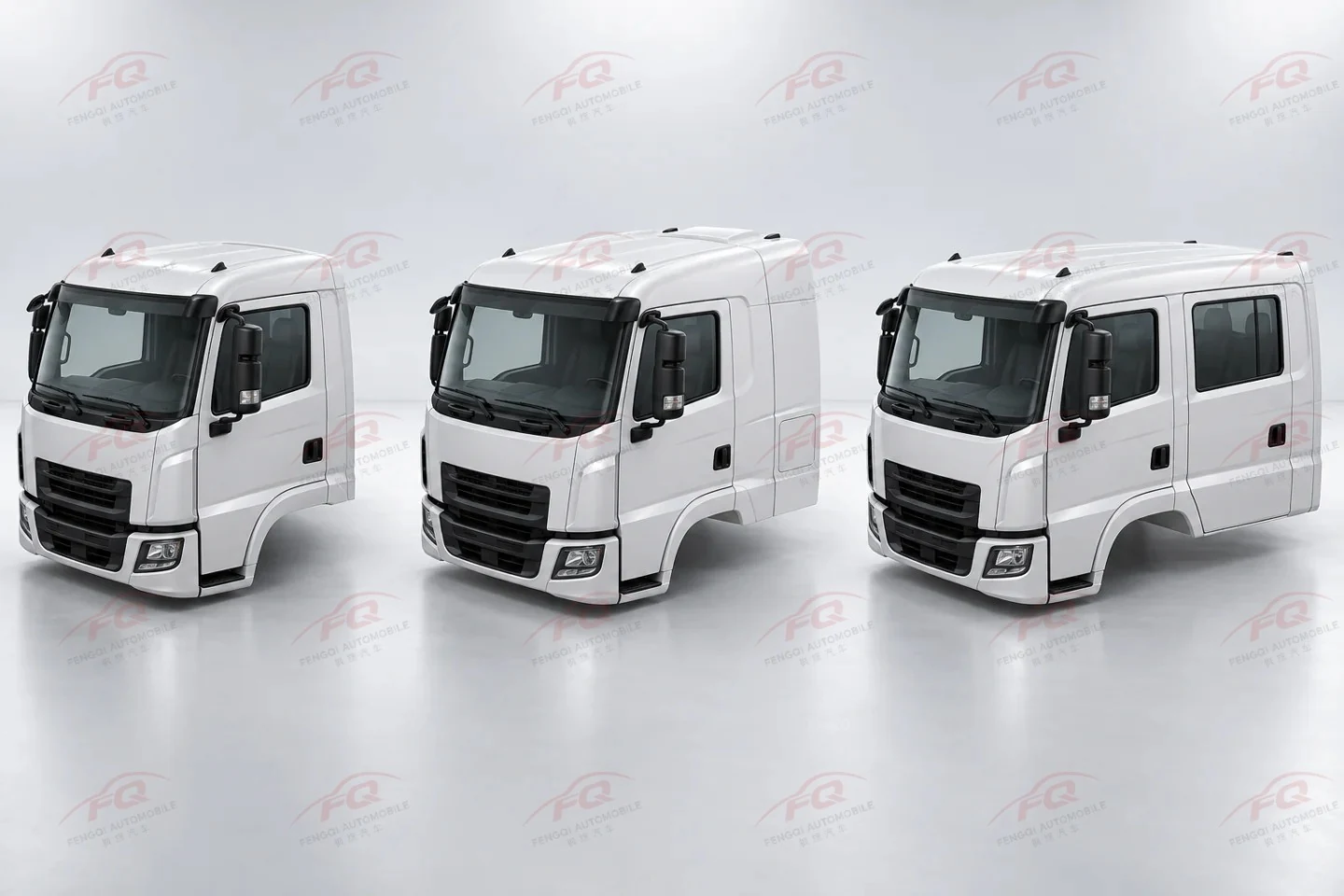
Day / single-row cab
One seating row. A shorter cab can leave more usable chassis length for the body. Confirm approved seating and access.
Extended / sleeper cab
Extra depth behind the front row may provide rest or storage space. “Extended” does not automatically mean a second approved seating row.
Crew / double-row cab
A separate rear seating area can carry the response crew. More cab length leaves less body space on a given overall length.
Low, medium/normal and high roofs are a separate choice from seating rows. Check actual internal height, overall vehicle height, access and available OEM combinations; not every cab is offered with every roof.
Power is more than a horsepower figure
Engine and transmission
Review output, torque curve, gearing, gross mass, gradients and repeated starts together. More horsepower alone does not define the better rescue chassis.
Stationary equipment duty
Confirm whether pumps or other equipment need a power take-off (PTO), hydraulic system, independent generator or another supply. Driving power and usable equipment power are different.
Destination and body interface
Check fuel, emissions and local service support, axle ratings, wheelbase, cab-to-axle space and OEM body-mounting guidance before ordering. OEM customisation is subject to available platforms and approval.
Match the specification to the job
Road transport
Balance crew, equipment mass and volume with road access and operating cost. Four-wheel drive is not automatically required.
Heavy equipment
Check each axle load, centre of gravity, mounting loads and usable body length—not only gross vehicle mass.
Fire and crew response
Review approved crew seating, entry/exit, pump duty and equipment access. A crew cab alone does not make a fire appliance.
Rough-site rescue
Review ground conditions, traction, clearance, turning space and recovery needs. Axle formula is only one part of the decision.
For a useful discussion, send the destination, route conditions, crew size, equipment weights and dimensions, working duty and preferred chassis. We can then check the body and chassis together.
Common buyer questions
What does 6×2 mean, and how is it different from 6×4?
Both have three axles. A 6×2 has one driven axle; a 6×4 has two. The choice depends on traction needs, operating conditions and the actual chassis specification—not simply on which number is larger.
Does 4×2 mean the truck has only four tyres?
No. The formula counts wheel positions, not individual tyres. Twin tyres on the same side of an axle count as one wheel position.
Does 6×4 always carry more than 6×2?
No. Rated gross mass, individual axle ratings, unladen mass and the completed body determine the available load. The axle formula alone is not a payload rating.
Does every rescue vehicle need four-wheel drive?
No. Road-based response and rough-site work have different needs. Review the route, ground conditions, gradients, clearance and recovery requirements before choosing the drive configuration.
Is an extended cab the same as a crew cab?
No. Extra space behind the front row may serve as a sleeper or storage area. It is not automatically a second approved seating row; confirm the specific cab and its approved occupant capacity.
Can I choose the engine first and design the body afterwards?
Discuss them together before ordering. Vehicle mass, gradients, equipment power, PTO availability, cooling and body space can affect the chassis choice. An engine power figure alone is insufficient.
Continue planning
References & scope
These are simplified drive-layout examples, not a steering or tyre specification. A 6×2 may have a leading or trailing non-driven axle; extra suffixes identify other arrangements. The formula alone does not establish payload, off-road ability, differential locks or wading capability.