China’s EV Export Rebate Change: What Special-Purpose Vehicle Buyers Should Check
China’s EV export rebate falls from 13% to 9% from April 2027. What buyers of electric special-purpose vehicles should confirm before the policy change affects their quotation.
From 1 April 2027, China’s VAT export rebate on the new energy vehicles listed in the official announcement will decrease from 13% to 9%.
For overseas buyers considering an electric special-purpose vehicle, this raises two questions: does the adjustment apply to the vehicle being purchased, and how will it affect the quotation?
Those questions belong in the cost review. Choosing the right chassis also requires an assessment of equipment power, operating conditions, chassis availability and local service support.
1. Confirm Whether the Rebate Adjustment Applies
Before estimating the price impact, ask your supplier to confirm the export classification of the complete vehicle and check it against the product list attached to the announcement.
The commercial description “special-purpose vehicle” alone is not enough to establish whether a particular configuration is covered.
For an order scheduled around the policy’s effective date, also confirm the planned export date and the quotation’s validity. The announcement specifies that the applicable rebate rate is determined by the export date shown on the customs declaration.
The rebate adjustment should be considered in the project’s cost calculation. It does not, by itself, determine whether an electric chassis is suitable for the work.
2. Assess Driving and Working Energy Together
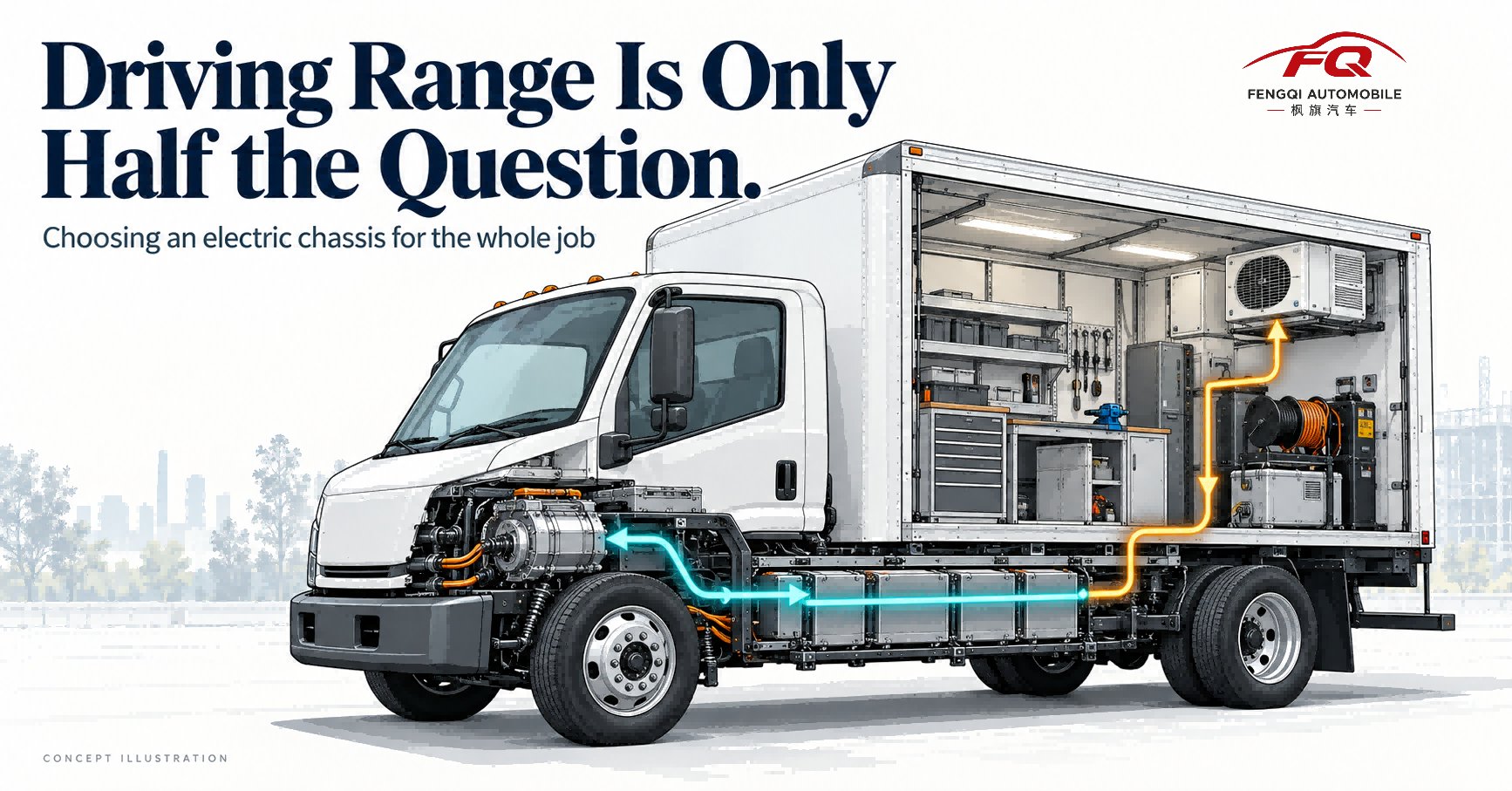
We built our first vehicle on an electric chassis in 2019. One lesson from that work remains central to our assessments: the chassis must support both travel and the equipment used at the destination.
Battery capacity, driving range and charging time are necessary starting points. For a special-purpose vehicle, buyers also need to establish:
- Which onboard equipment will draw power from the chassis.
- The continuous and peak power available through the chassis interface.
- The equipment’s expected energy consumption during a working day.
- Whether equipment must operate while driving, while parked, or both.
- How the chassis limits equipment power at a low state of charge.
- Which functions require an independent or backup power supply.
Battery capacity and equipment power output are different specifications. A large battery does not automatically mean the chassis allows enough power to be supplied to the onboard equipment.
A vehicle that drives a short distance and then operates equipment for several hours has a different energy requirement from one that travels a long route with a small equipment load. The assessment must reflect the actual daily schedule.
3. Confirm the Power Interface with the Chassis Manufacturer
Before finalising the electrical design, the vehicle integrator needs to confirm the available power interface, output limits and operating conditions with the chassis manufacturer.
Depending on the platform, the required output may need manufacturer configuration or authorisation.
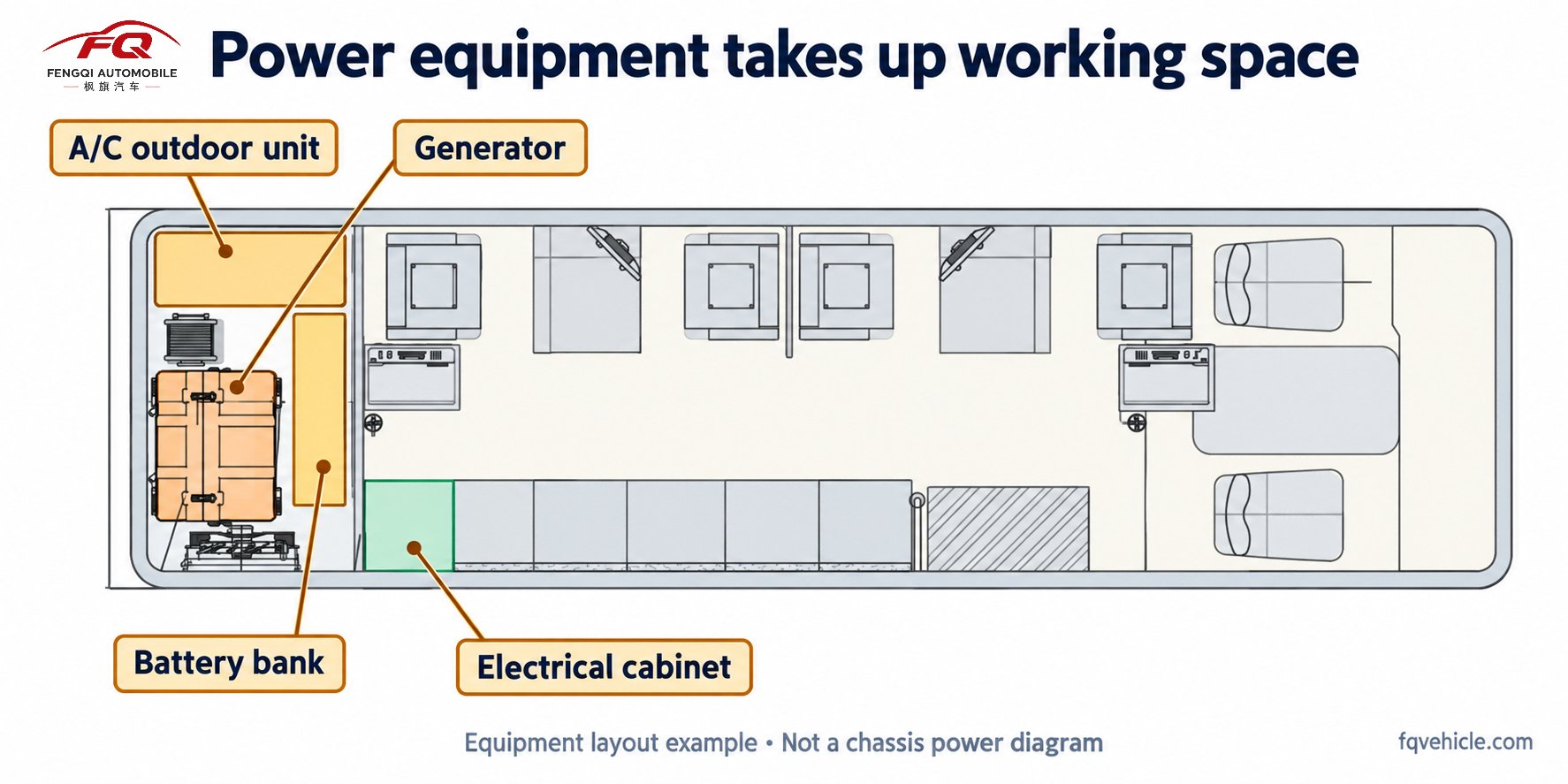
If the chassis cannot supply the required power or energy, an independent battery system or a generator may be considered. Each option affects the complete vehicle:
- Additional weight reduces the payload available for equipment, materials or other loads.
- Installation space may reduce the working area or storage capacity.
- Mounting, access and maintenance requirements must be incorporated into the layout.
- Charging or fuel arrangements become part of the operating plan.
These trade-offs should be reviewed before the chassis and equipment are purchased. After integration, the complete vehicle still needs to provide sufficient working space and remain within its applicable weight limits.
4. Confirm the Exact Chassis Version
A special-purpose vehicle’s drawings, mounting arrangements and electrical integration are developed around a particular chassis configuration.
Changes to battery placement, electrical interfaces or other chassis features may require the integration design to be reviewed. Whether additional approval or certification work is necessary depends on the changes and the destination market.
Before placing an order, buyers should confirm:
- Will the quoted chassis version remain available through the production period?
- Can later vehicles be supplied with the same configuration?
- If the chassis changes, which parts of the existing design can be reused?
- What parts and service support will be available for that version?
- Who will assess any effects on the completed vehicle’s approvals?
These questions are particularly relevant to phased purchases and repeat orders.
5. Check Service Support in the Destination Market
Electric vehicles generally have fewer routine powertrain maintenance items than diesel vehicles. Fault diagnosis and repair require a separate review.
Depending on the chassis brand and model, repairs may require manufacturer software, authorised access, specialist tools or replacement assemblies.
The ability to build and integrate a vehicle in China does not establish whether that chassis can be serviced where the customer will operate it.
Before committing, identify who can diagnose the exact chassis model locally, what repairs they can carry out, and how replacement parts will be supplied.
Review the body and onboard equipment separately. Some routine mechanical work may be handled by a local workshop, while electrical controls and specialist equipment may require support from the relevant supplier. Responsibilities should be clear before delivery.
6. Include Battery Condition and Resale Assumptions
A purchase assessment should cover more than the initial vehicle price.
Battery condition, warranty terms and the local market for used electric commercial vehicles can affect ownership costs and resale value. Residual-value assumptions used for a diesel vehicle should not be transferred directly to an electric one.
Where future resale value is uncertain, the operating plan should account for that uncertainty.
Choose the Chassis Around the Job
An electric chassis may be well suited to a project with predictable routes, suitable charging access and an equipment load that the power system can support.
Other operating conditions may favour a diesel or hybrid configuration. The recommendation should follow an assessment of the complete working vehicle.
The export rebate adjustment is a reason to review costs and classifications. It is also an opportunity to confirm that the specification being quoted matches the work the vehicle must perform.
Request a Chassis and Integration Assessment
Before selecting the chassis, send our team:
- The vehicle’s intended use and destination market.
- Expected daily distance and hours of operation.
- The equipment list, including power ratings where available.
- Which equipment must operate simultaneously.
- Charging availability at the base and deployment sites.
- Payload, working-space and local service requirements.
If you already have a chassis or equipment model selected, include its technical information. We can review the integration requirements, identify constraints and explain the available options.
Policy source: Ministry of Finance and State Taxation Administration announcement on export rebate adjustments.
Planning a build?
Tell us your operational requirements — we'll come back with an engineered proposal.
WeChat QR

WhatsApp QR